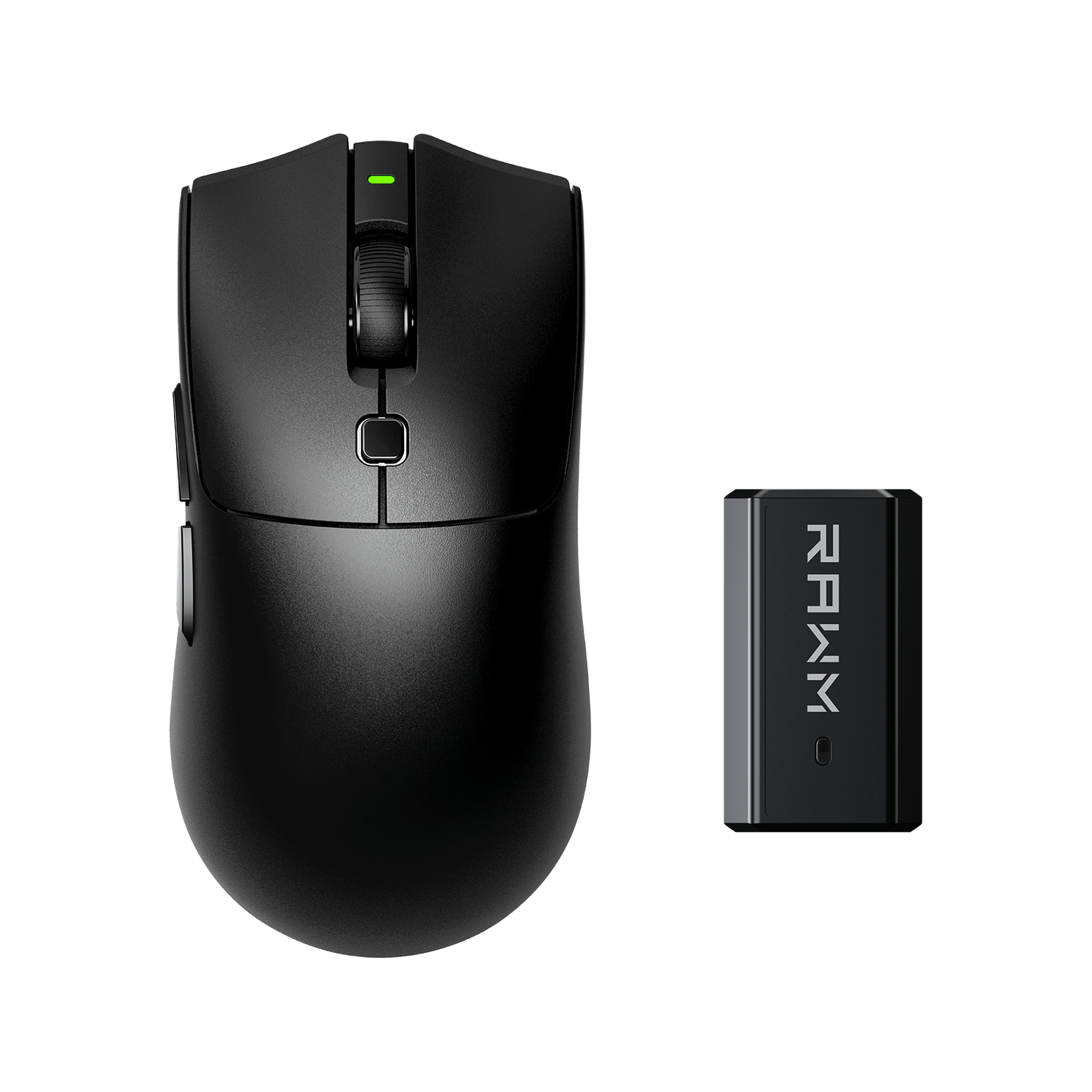
Why are lightweight mice hollow?
- The Main Goal Is Weight Reduction
- Why Hollow Designs Became Popular
- Does Hollow Mean Less Durable
- Impact on Performance and Control
- Trade-Offs of Hollow Mouse Designs
- Alternatives to Hollow Lightweight Designs
- Why Weight Matters More Than Ever

Lightweight gaming mice have become increasingly popular, especially among competitive players who value speed and precision. One of the most noticeable design choices in many of these mice is the hollow or honeycomb shell. At first glance, it may look unusual or even fragile, but this design serves a very specific purpose.
Reducing mouse weight can significantly change how it feels and performs. A lighter mouse requires less force to move, making quick flicks, rapid adjustments, and long gaming sessions more comfortable. To achieve these weight reductions without sacrificing performance, manufacturers often remove unnecessary material from the mouse shell, resulting in a hollow structure.
This design is not just about aesthetics—it directly affects handling, control, and overall usability.
1. The Main Goal Is Weight Reduction
The primary reason lightweight mice are hollow is to reduce overall weight. Traditional mice use solid plastic shells, which add extra grams that are not always necessary.
By removing sections of the outer shell, manufacturers can significantly lower the weight without affecting core components like the sensor or internal circuitry.
A lighter mouse allows for faster movement with less effort. This is especially important for players who rely on quick reactions and precise aiming.
Even a small reduction in weight can make a noticeable difference over long sessions, reducing fatigue and improving responsiveness.
2. Why Hollow Designs Became Popular
The rise of competitive gaming has pushed demand for faster and more responsive peripherals. Players began seeking mice that could move effortlessly across large mousepads without resistance.
As a result, manufacturers started experimenting with ways to reduce weight while maintaining durability. The hollow or honeycomb design emerged as an effective solution.
This approach allowed designers to remove material from non-critical areas while reinforcing key structural points. The result is a mouse that feels light without becoming too fragile.
Over time, this design became widely accepted and is now a common feature in many lightweight gaming mice.
3. Does Hollow Mean Less Durable
At first glance, a hollow mouse might seem weaker than a solid one. However, most lightweight mice are engineered to maintain structural integrity despite the reduced material.
The shell is designed with reinforced sections that handle pressure where the hand rests and where buttons are pressed.
In many cases, the materials used are strong enough to withstand normal use without issues. As long as the mouse is not subjected to excessive force, durability is generally not a problem.
That said, hollow mice may feel slightly different in hand compared to solid designs. Some users prefer the sturdier feel of a full shell, while others quickly adapt to the lighter structure.
4. Impact on Performance and Control
Weight plays a direct role in how a mouse performs during fast movements. A lighter mouse can be moved more quickly and stopped more easily, which is crucial for precise aiming.
Lower weight also reduces inertia, meaning the mouse responds more immediately to changes in direction.
For players using low sensitivity settings, where large arm movements are common, a lightweight mouse can reduce strain and improve endurance.
The hollow design contributes to this by eliminating unnecessary mass while preserving the functionality of the device.
Consistent movement and reduced resistance can help improve accuracy over time.
5. Trade-Offs of Hollow Mouse Designs
While there are clear advantages, hollow mice also come with some trade-offs.
One common concern is dust and debris entering through the holes. Over time, particles may accumulate inside the mouse, requiring occasional cleaning.
Another factor is feel. Some users find that the open design changes how the mouse feels in the hand, especially if their grip style places fingers over the holes.
Additionally, hollow mice may offer slightly less protection against moisture compared to fully sealed designs.
These trade-offs are usually minor, but they are worth considering when choosing a mouse.
6. Alternatives to Hollow Lightweight Designs
Not all lightweight mice use a hollow shell. Some manufacturers achieve low weight through different methods, such as using thinner materials or more compact internal designs.
These mice maintain a solid exterior while still reducing weight, offering a different balance between feel and performance.
Players who prefer a more traditional grip may find solid lightweight mice more comfortable, even if they are slightly heavier than honeycomb designs.
The choice often comes down to personal preference and how the mouse feels during extended use.
7. Why Weight Matters More Than Ever
As gaming becomes more competitive, small improvements in comfort and control can have a noticeable impact.
A lighter mouse reduces fatigue, allowing players to maintain consistent performance over longer sessions. It also improves responsiveness during fast movements.
The hollow design is simply one of the most effective ways to achieve this weight reduction without compromising functionality.
Some setups focus heavily on maintaining smooth and consistent control, combining lightweight mice with stable tracking environments and reliable hardware such as the Leviathan V4 to ensure precise and predictable movement.
Ultimately, the goal is not just to make the mouse lighter, but to improve how it feels and performs during real use.
Have you ever tried a lightweight mouse and noticed a difference in how quickly you could move and stop it?
>>See also Can mouse sensor track on fabric or bed? >>>>>