What mouse helps with spray control?
- What Makes a Mouse Good for Spray Control?
- Is a Lightweight Mouse Better for Spray Control?
- Does Mouse Shape Affect Spray Control?
- Does DPI Affect Spray Control?
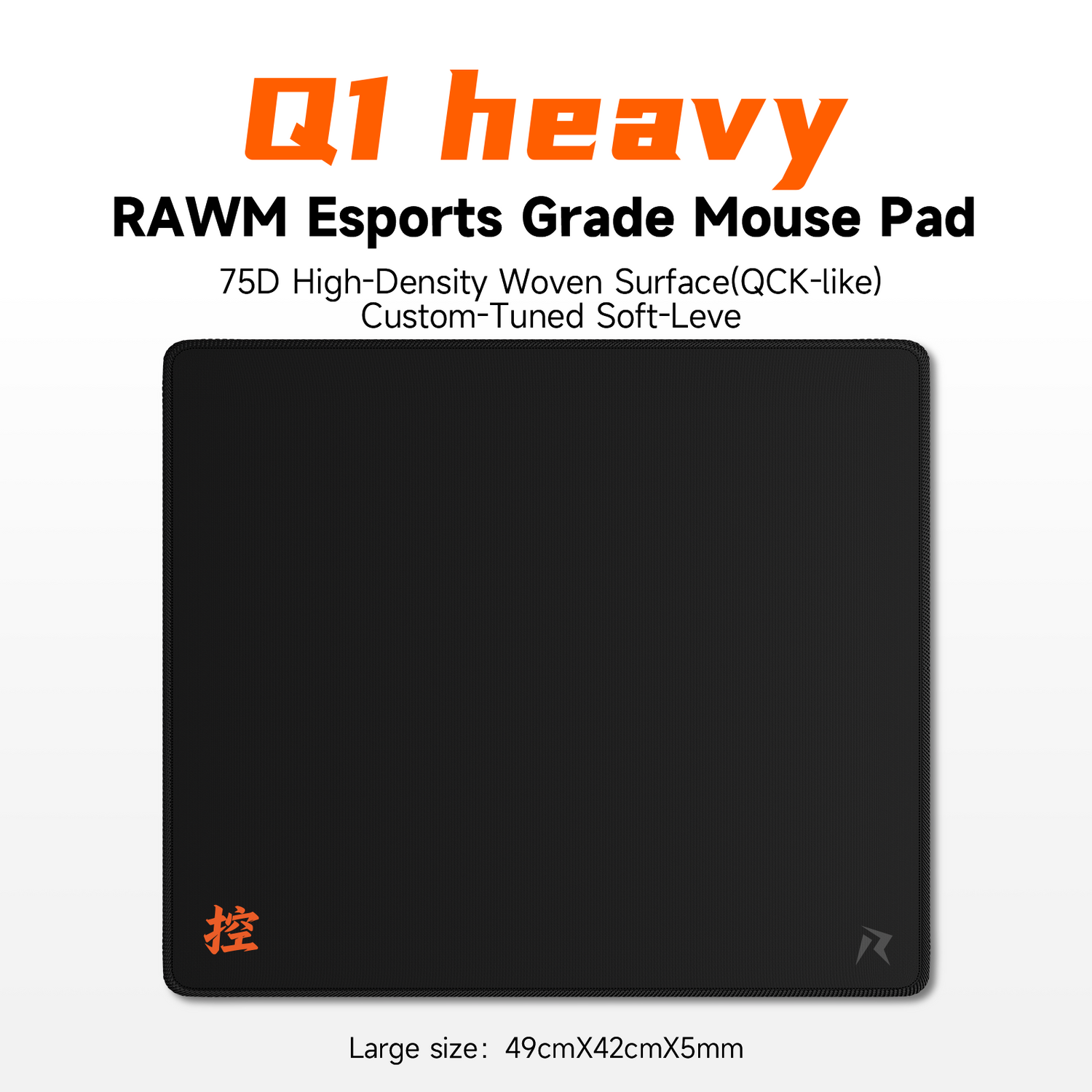
- What Mousepad Is Best for Spray Control?
- Can a Gaming Mouse Actually Improve Spray Control?
- What Is the Best Mouse for Spray Control?

Spray control is one of the most demanding mechanical skills in competitive FPS games. When you hold down the trigger, your weapon begins to recoil, and you need to move your mouse in the opposite direction to keep your crosshair on target. The right gaming mouse cannot control recoil for you, but it can make the physical process of controlling spray more comfortable, predictable, and consistent.
So, what mouse helps with spray control?
Generally, the best mouse for spray control is one that is light enough for smooth downward movements, shaped comfortably for your grip, responsive enough for consistent tracking, and easy to control during repeated adjustments.
However, there is no single "spray control mouse" that automatically makes recoil easier. Your sensitivity, grip style, mousepad, and familiarity with the weapon's recoil pattern all matter. A mouse that feels perfect for one player may feel completely different to another.
The goal is to find a mouse that lets you make controlled vertical and horizontal corrections without excessive tension or unnecessary resistance.
1. What Makes a Mouse Good for Spray Control?
Spray control requires a combination of vertical movement, horizontal correction, and timing.
When you hold down the trigger, your mouse movement needs to counter the recoil pattern. In many FPS games, this starts with pulling downward and then adjusting horizontally as the weapon's recoil changes.
That means your mouse needs to feel predictable during continuous movement.
Several characteristics can help.
Weight is one of the most obvious factors. A lighter mouse generally requires less physical effort to move, which can make repeated recoil corrections feel easier. This can be especially useful for players who use low sensitivity and rely on larger arm movements.
Shape is equally important. If the mouse fits your hand naturally, you can maintain a stable grip while making controlled movements.
Sensor performance matters as well. A reliable sensor should track your movements consistently without unwanted acceleration or unpredictable behavior.
Finally, surface friction plays a role. Your mousepad should provide enough control to stop the mouse precisely without making downward recoil movements feel difficult.
| Mouse Feature | Why It Matters for Spray Control | What to Look For |
|---|---|---|
| Lightweight design | Makes repeated recoil corrections easier | Comfortable weight for your sensitivity |
| Ergonomic shape | Helps maintain a stable grip | Fits your hand and grip style |
| Reliable sensor | Keeps movement predictable | Consistent tracking |
| Good click latency | Helps maintain timing consistency | Fast, reliable click response |
| Balanced weight distribution | Makes directional movement more predictable | No awkward front or rear heaviness |
| Comfortable side buttons | Reduces accidental contact | Easy access without interfering with grip |
The ideal combination is different for every player.
A lightweight mouse may feel excellent for large downward recoil corrections, but another player may prefer a slightly heavier mouse because it provides more momentum and feels easier to stabilize.
The most important thing is consistency.
2. Is a Lightweight Mouse Better for Spray Control?
A lightweight mouse can be helpful for spray control, particularly in games where recoil requires significant downward movement.
When you pull the mouse downward repeatedly, a lighter mouse generally requires less force to move across the pad. This can make long sprays feel less tiring.
This is especially noticeable when using a low sensitivity setting.
Imagine a player using a low sensitivity configuration that requires a substantial amount of mouse movement to control recoil. A heavy mouse may require more effort to move repeatedly, while a lighter mouse can feel more responsive.
However, lighter isn't automatically better.
Some players find extremely lightweight mice harder to control because they have less physical resistance. When making small corrections, a heavier mouse can sometimes feel more stable.
This is why weight should be considered together with sensitivity.
| Mouse Weight | Potential Spray Control Advantage | Possible Drawback |
|---|---|---|
| Very light | Fast, effortless recoil corrections | May feel less stable |
| Light | Easy repeated movement | Can require adjustment |
| Medium | Balanced control and movement | Less effortless than lighter mice |
| Heavy | More physical stability | Can increase fatigue during long sprays |
Your grip also matters.
A fingertip grip often benefits from a mouse that feels easy to reposition, while palm grip users may prefer a shape that provides more physical support.
If you already use a lightweight mouse and your spray control feels comfortable, there may be little reason to switch purely because another mouse is lighter.
The goal is not to find the lightest mouse possible.
It's to find a weight that allows you to control recoil without excessive effort while still giving you enough stability for precise corrections.

3. Does Mouse Shape Affect Spray Control?
Mouse shape can have a surprisingly large effect on spray control.
During a long spray, your hand may need to maintain the same grip while your wrist or arm repeatedly moves downward and then makes horizontal corrections.
If the shape doesn't fit your hand, you may unconsciously squeeze the mouse to keep it stable.
That additional tension can make your movements less consistent.
A good shape should allow your fingers to rest naturally on the mouse while keeping your thumb and palm supported.
For example, a right-handed ergonomic mouse may feel comfortable for players who prefer more palm support. A symmetrical mouse may work better for players who frequently reposition their grip or use a more centered hand position.
The ideal choice depends on your grip.
| Grip Style | Shape Characteristics That May Help | Spray Control Consideration |
|---|---|---|
| Palm grip | Larger rear, more palm support | Comfortable for longer sessions |
| Claw grip | Defined rear support and curved sides | Good balance of stability and control |
| Fingertip grip | Compact, low-contact shape | Easy micro-adjustments |
| Hybrid grip | Moderate support with flexible positioning | Versatile for different movements |
For players who prefer a right-handed ergonomic shape, the ER21PRO can be an option to consider when comfort and stable hand positioning are priorities. Its value for spray control isn't because the mouse automatically improves recoil, but because a comfortable shape can help you maintain a consistent grip while practicing repeated recoil movements.
The important thing is to choose a shape that disappears from your attention once you start playing.
If you're constantly adjusting your hand because the mouse feels too narrow, too wide, too tall, or too short, you're spending attention on your equipment instead of your aim.
4. Does DPI Affect Spray Control?
DPI can influence how spray control feels, but it isn't directly responsible for your ability to control recoil.
Your overall sensitivity is determined by the combination of mouse DPI and in-game sensitivity.
For example, two players could have different DPI settings but similar overall sensitivity.
| DPI | In-Game Sensitivity | General Effect |
|---|---|---|
| 400 | Higher | Lower sensor resolution, slower base movement |
| 800 | Moderate | Common balance |
| 1600 | Lower | More movement resolution |
| 3200 | Very low | Highly responsive physical input |
For spray control, what matters most is whether you can make the required downward and horizontal movements accurately.
If your sensitivity is too high, small hand movements may cause the crosshair to move too far. This can make it difficult to maintain control during a long spray.
If your sensitivity is too low, you may struggle to move far enough across the mousepad to compensate for recoil.
This is why many players prefer a moderate sensitivity that gives them enough control for both recoil management and rapid target acquisition.
A good mouse won't fix an unsuitable sensitivity.
Before changing your mouse, consider testing your DPI and in-game sensitivity first. Once you find a sensitivity that feels comfortable, you can evaluate whether your current mouse is helping or hindering your physical control.
5. What Mousepad Is Best for Spray Control?
The mousepad is often overlooked when discussing spray control.
A mousepad with too much friction can make it difficult to perform long downward movements smoothly. A very fast surface, on the other hand, may make it harder to stop the mouse precisely.
For spray control, many players prefer a balanced or control-oriented surface.
The idea is to find enough glide for smooth recoil compensation while maintaining enough stopping power for precise corrections.
This is particularly important when a weapon's recoil pattern requires you to transition from vertical movement into horizontal corrections.
A surface that feels predictable is more important than one that is simply fast or slow.
Your mouse feet also influence this experience.
Fresh mouse feet can feel faster than worn feet, while different materials can change how the mouse interacts with the pad.
This means your complete setup should be considered together:
Mouse + Mouse Feet + Mousepad + Sensitivity
Changing only one component may alter the entire feel of your spray control.
If you already have a mouse that fits your hand well, trying a different mousepad may be a more affordable way to improve your experience.

6. Can a Gaming Mouse Actually Improve Spray Control?
A gaming mouse can improve the conditions for spray control, but it cannot replace practice.
Recoil patterns are learned through repetition. You need to understand how your weapon behaves and develop the muscle memory required to counter that movement.
A better mouse can help you execute those movements more comfortably.
For example, a comfortable mouse may:
- Reduce hand fatigue
- Make repeated movements easier
- Provide more predictable tracking
- Reduce grip tension
- Improve consistency
- Make long practice sessions more comfortable
But it won't automatically teach you the correct recoil pattern.
If your spray control is inconsistent, changing your mouse may not solve the underlying issue.
Instead, use your mouse as a tool for practice.
Spend time in a training range or practice environment. Learn how the weapon moves during a sustained spray. Then practice pulling against that movement while maintaining your crosshair position.
The more familiar you become with the pattern, the less conscious effort you need to apply.
A good mouse simply gives you a reliable physical interface for performing those movements.

7. What Is the Best Mouse for Spray Control?
There isn't one universally best mouse for spray control.
Instead, look for a combination of characteristics that matches your personal setup.
If you use low sensitivity, a lightweight mouse may make long recoil corrections easier.
If you prioritize stability, a medium-weight mouse may feel more controlled.
If you use palm grip, an ergonomic shape may provide better support.
If you use fingertip grip, a smaller and lighter design may allow faster adjustments.
If you play for long sessions, comfort may be more important than a few grams of weight.
The Leviathan V4 is another option for players who prefer a gaming mouse that can be used for fast, controlled movements during competitive play. As with any mouse, its suitability for spray control ultimately depends on whether its shape, weight, and overall feel match your grip and sensitivity.
The most important thing is consistency.
You should be able to:
- Pull down smoothly
- Make horizontal corrections
- Stop the mouse precisely
- Maintain a relaxed grip
- Repeat the same movement reliably
If your mouse allows you to do those things comfortably, it's probably suitable for spray control.
A mouse won't make recoil disappear, but the right one can make the physical process of controlling it feel more natural.
If you're currently struggling with spray control, don't immediately assume you need a new mouse. First, check your sensitivity, mousepad, grip, and practice routine.
Then ask yourself whether your current mouse is actually limiting your ability to perform the movements you already understand.
If the answer is yes, a lighter, better-fitting, or more comfortable mouse could make a meaningful difference.
Ultimately, the best mouse for spray control is the one that lets you perform consistent recoil corrections without fighting against your equipment.
What matters most isn't the mouse with the most impressive specifications. It's the mouse that feels predictable every time you start spraying.
Would you rather use a lightweight mouse for faster recoil corrections or a slightly heavier mouse for more stability?
>>See also Can high DPI cause jittering? >>>>>