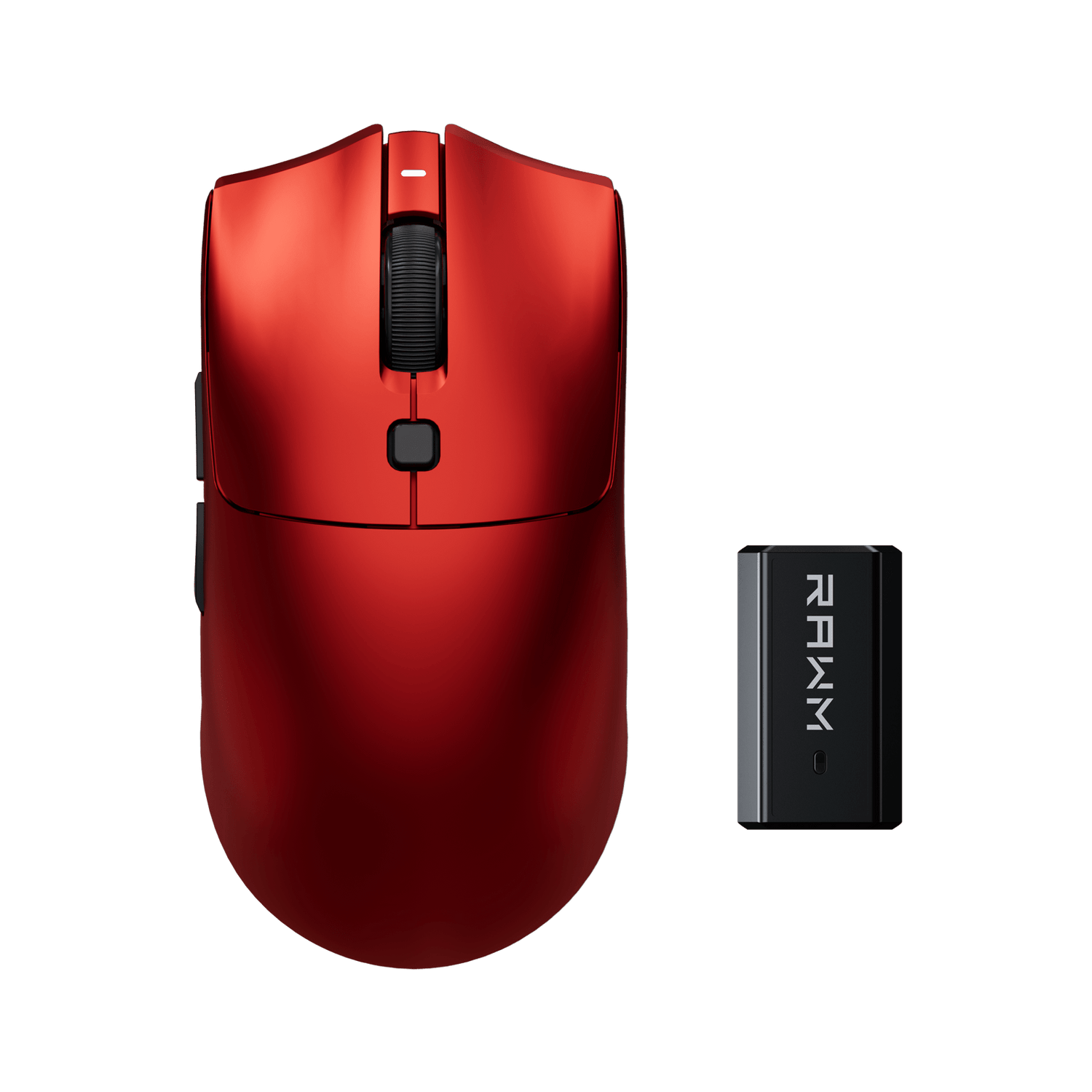
Can I use gloves with gaming mice?
- Do Gloves Affect Gaming Mouse Accuracy?
- What Type of Gloves Are Best for Gaming?
- Can Gloves Help With Sweaty Hands?
- How Do Gloves Change Your Mouse Grip?
- Are Gloves Good for Competitive FPS Gaming?
- How to Choose Gloves for a Gaming Mouse
- Should You Use Gloves or Play With Bare Hands?

Gaming mice are designed to be controlled directly by your hands, but that doesn't mean you have to use them with bare skin. Some gamers consider wearing gloves because they struggle with sweaty hands, play in a cold room, experience friction issues, or simply prefer the feel of a thin layer between their skin and the mouse.
So, can you use gloves with gaming mice?
Yes. Gloves generally won't prevent a gaming mouse from tracking correctly because the sensor is located underneath the mouse and tracks movement across the mousepad. However, gloves can change how the mouse feels in your hand. The material, thickness, fit, and breathability can affect grip, finger movement, comfort, and how consistently you control the mouse.
For casual gaming, these differences may not matter much. For competitive FPS players, however, even small changes in friction can influence micro-adjustments and overall consistency.
The right question isn't simply whether gloves work with gaming mice. It's whether they make your particular setup more comfortable and controllable.
1. Do Gloves Affect Gaming Mouse Accuracy?
Wearing gloves does not directly affect the optical sensor inside a gaming mouse. The sensor tracks the movement of the mouse across the mousepad, so covering your hand won't change how the sensor reads the surface.
The potential difference comes from how you physically control the mouse.
A glove creates an additional layer between your skin and the mouse shell. This changes the amount of friction and tactile feedback you feel when moving your fingers.
Depending on the glove, you may notice differences in:
-
Grip strength
-
Finger positioning
-
Button control
-
Side grip
-
Micro-adjustments
-
Mouse repositioning
-
Overall comfort
A thin, close-fitting glove may barely change the experience. A thick or loose glove can make the mouse feel noticeably different.
This is particularly relevant to players who use fingertip or claw grip. These grips depend heavily on finger positioning, so adding material around the fingertips can alter the way the mouse feels during small movements.
Palm grip users may notice less of a difference because more of the hand rests against the mouse and larger movements may come from the forearm.
Your game also matters.
In a slower strategy game, the difference between gloves and bare hands may be practically irrelevant. In a competitive FPS, however, precise tracking and quick corrections can make changes in friction much more noticeable.
The good news is that gloves don't inherently make you less accurate. The main issue is whether your particular gloves allow you to maintain the same level of control.

2. What Type of Gloves Are Best for Gaming?
If you're interested in trying gloves with a gaming mouse, the material and fit are more important than the label on the packaging.
A good gaming glove should feel like a natural extension of your hand rather than a bulky layer that gets in the way.
Thin, flexible, close-fitting materials are generally the easiest to adapt to. They allow your fingers to move naturally and are less likely to change the effective size of the mouse in your hand.
| Glove Type | Finger Mobility | Grip Consistency | Breathability | Overall Gaming Suitability |
|---|---|---|---|---|
| Thin sports gloves | High | High | High | Excellent |
| Lightweight fabric gloves | High | Medium to high | Medium to high | Good |
| Compression gloves | High | High | Medium | Good |
| Loose cotton gloves | Medium | Medium | Medium | Fair |
| Thick winter gloves | Low | Low | Low | Poor |
| Loose synthetic gloves | Medium | Unpredictable | Low to medium | Poor |
The best option depends on why you want to wear gloves in the first place.
If you're trying to manage sweaty hands, breathability should be a priority. If you're gaming in a cold environment, warmth may matter more, but you should avoid materials that significantly restrict finger movement.
For competitive gaming, loose material is usually undesirable. Excess fabric can bunch up around the fingertips or palm, creating inconsistent contact with the mouse.
This can be especially frustrating during fast movements because your hand may move slightly inside the glove before the mouse responds to your intended movement.
A close fit helps eliminate this problem.
However, "tight" shouldn't mean uncomfortable. A glove that restricts circulation or makes your fingers feel compressed is unlikely to improve your gaming experience.
The ideal fit is secure but flexible.

3. Can Gloves Help With Sweaty Hands?
Sweaty hands are probably the most practical reason a gamer might consider wearing gloves.
During long gaming sessions, sweat can accumulate between the hand and mouse. This can make the shell feel slippery and encourage you to grip the mouse more tightly.
That can create a cycle:
Sweaty hands → reduced grip → tighter grip → increased tension → greater fatigue
A breathable glove may help interrupt this cycle by creating a consistent layer between your skin and the mouse.
For some players, this can make the mouse feel more predictable throughout a long session.
However, gloves aren't automatically a solution to sweaty hands.
The wrong material can trap heat and moisture, making the problem worse. A thick synthetic glove, for example, may create a warm environment around your hand and cause more sweating.
| Situation | Potential Benefit of Gloves | Potential Drawback | Better Choice |
|---|---|---|---|
| Sweaty hands | Helps manage moisture | Poor materials may trap heat | Thin, breathable fabric |
| Cold gaming room | Keeps fingers warmer | Thick gloves reduce control | Lightweight thermal material |
| Slippery mouse shell | Adds a consistent contact layer | Wrong fabric may slide | Close-fitting textured fabric |
| Long gaming sessions | May improve comfort | Can increase heat buildup | Breathable, lightweight glove |
| Competitive FPS | May stabilize grip | Changes tactile feedback | Very thin, close-fitting glove |
Before buying gloves, it's worth considering whether the problem actually comes from the mouse itself.
A mouse with a slippery coating may be harder to control regardless of whether you're wearing gloves. Likewise, a mouse that doesn't fit your hand properly may force you to grip it too tightly.
Your room temperature and humidity can also affect sweating.
In some cases, improving airflow or taking short breaks may help more than adding another layer to your hand.
4. How Do Gloves Change Your Mouse Grip?
Your mouse grip is one of the biggest factors determining whether gloves will feel comfortable.
With a palm grip, much of your hand rests on the mouse. Because your palm provides a large contact area, a thin glove may have relatively little impact.
Claw grip is more sensitive to changes in finger positioning. Your fingers remain arched, and the tips of your fingers interact directly with the primary buttons. Even a small change in material thickness can alter the feeling of clicking and aiming.
Fingertip grip may be the most sensitive of the three.
Because the fingers do most of the work, fingertip users often depend on subtle changes in friction to control the mouse. A glove that makes the fingertips less sensitive or changes the grip surface may require an adjustment period.
The following table summarizes the likely impact:
| Grip Style | Effect of Thin Gloves | Effect of Thick Gloves | Main Concern |
|---|---|---|---|
| Palm | Low to moderate | Moderate | Overall comfort |
| Claw | Moderate | High | Finger positioning |
| Fingertip | Moderate to high | Very high | Micro-control |
| Hybrid | Moderate | Moderate to high | Consistency |
This doesn't mean fingertip users can't wear gloves. It simply means they may need to pay more attention to material thickness and fit.
Your mouse shape also plays an important role.
A mouse that naturally supports your hand can reduce the amount of grip pressure required. When the shape feels right, you may be less dependent on direct skin-to-shell contact for stability.
For players who prefer an ergonomic mouse designed for stable hand positioning, the Leviathan V4 can be part of a setup where comfort and consistent control are priorities. Whether gloves improve that experience depends on the individual player and the material being used.
The best combination is the one that allows your hand to remain relaxed while maintaining reliable control.
5. Are Gloves Good for Competitive FPS Gaming?
Competitive FPS players tend to be more sensitive to small changes in mouse control than casual players.
When you're playing at a high level, your aim depends on repeatable movements. You want the same hand movement to produce the same result every time.
Adding gloves can potentially affect this consistency.
If the glove becomes warmer as the session continues, your hand may sweat differently. If the material shifts slightly, the friction may change. If the glove is too thick, you may lose some tactile feedback.
These aren't necessarily deal-breakers, but they're factors worth considering.
If you want to use gloves competitively, consistency should be your priority.
Try to use the same gloves during practice sessions that you intend to use during serious matches. This allows your hand to adapt to the friction and fit.
It's also worth testing the gloves across different types of gameplay.
A glove may feel excellent during slow tracking exercises but become distracting during fast flick shots. Another may feel comfortable during short sessions but become too warm after several hours.
This is why a short test isn't always enough.
Give yourself enough time to determine whether the gloves remain comfortable and consistent throughout a full gaming session.
If they do, there's no reason you can't make them part of your regular setup.
If you find yourself constantly thinking about the gloves or adjusting them while playing, they may be doing more harm than good.
The best gaming accessories are usually the ones you stop noticing once the game begins.

6. How to Choose Gloves for a Gaming Mouse
If you decide that gloves are worth trying, focus on four things: fit, thickness, material, and breathability.
Fit should be your first priority.
The glove should stay in place as your hand moves. Excess fabric around the fingertips can interfere with clicking and make precise movements feel inconsistent.
Thickness is also important.
For mouse gaming, thinner is generally easier to adapt to. You want enough material to provide the benefits you're looking for without significantly changing the shape of the mouse in your hand.
Material determines how your hand interacts with the mouse.
Some materials provide more friction, while others are smoother. There isn't one universally correct choice. The ideal level depends on your mouse coating and personal preference.
Breathability becomes especially important during long sessions.
If you tend to sweat heavily, a breathable fabric may be more useful than a material designed primarily for warmth.
It's also worth considering how the glove interacts with your mousepad.
Your hand isn't the only point of contact involved in gaming. Depending on your grip and technique, parts of your palm or wrist may contact the mousepad while you move.
A glove that works well for one setup may feel completely different with another.
Ideally, test the complete combination:
Glove + Mouse + Mousepad + Grip Style
This is more useful than judging the glove in isolation.
7. Should You Use Gloves or Play With Bare Hands?
For most gamers, bare hands remain the simplest option.
Direct contact provides natural tactile feedback, and you don't have to worry about additional material changing friction or heat.
However, there is no rule that says gaming mice must be used without gloves.
If gloves help solve a specific problem without interfering with control, they can be a perfectly reasonable part of your setup.
They may be worth considering if you:
-
Experience sweaty hands
-
Play in a cold environment
-
Prefer a particular grip texture
-
Want more consistent contact with the mouse
-
Find gloves more comfortable during long sessions
On the other hand, gloves may not be a good fit if they:
-
Make your hand too warm
-
Reduce finger flexibility
-
Shift during movement
-
Make the mouse slippery
-
Change your aim significantly
-
Require frequent adjustment
The most important thing is to evaluate the result based on your own experience.
Don't assume that gloves will automatically improve your aim, and don't assume that they will automatically make it worse.
Your mouse shape, grip style, sensitivity, and gaming habits all influence the result.
For someone who already has a comfortable setup, gloves may provide little benefit. For another player who constantly struggles with sweaty hands, a thin breathable glove may make a noticeable difference.
Ultimately, you can absolutely use gloves with a gaming mouse. The mouse sensor will continue to work normally, but your experience with the mouse may change depending on the glove.
The best choice is the one that helps you maintain a comfortable, stable, and repeatable grip without distracting you from the game.
If you decide to try gloves, start with a thin, close-fitting, breathable option and give yourself enough time to adapt. Test it during normal gaming sessions before deciding whether it genuinely improves your experience.
For competitive players, consistency is more important than novelty. If gloves help you maintain the same level of control from the beginning to the end of a long session, they may be worth using. If they introduce more variables than they solve, bare hands may still be the better option.
In the end, there is no universal rule for how gamers should hold a mouse. The best setup is the one that allows you to play comfortably, maintain control, and focus on the game rather than your equipment.
Would you consider wearing gloves while gaming to manage sweaty hands, or do you prefer the direct feel of using a mouse with bare hands?
>>See also Can Hand Exercises Improve Mouse Aim? >>>>>