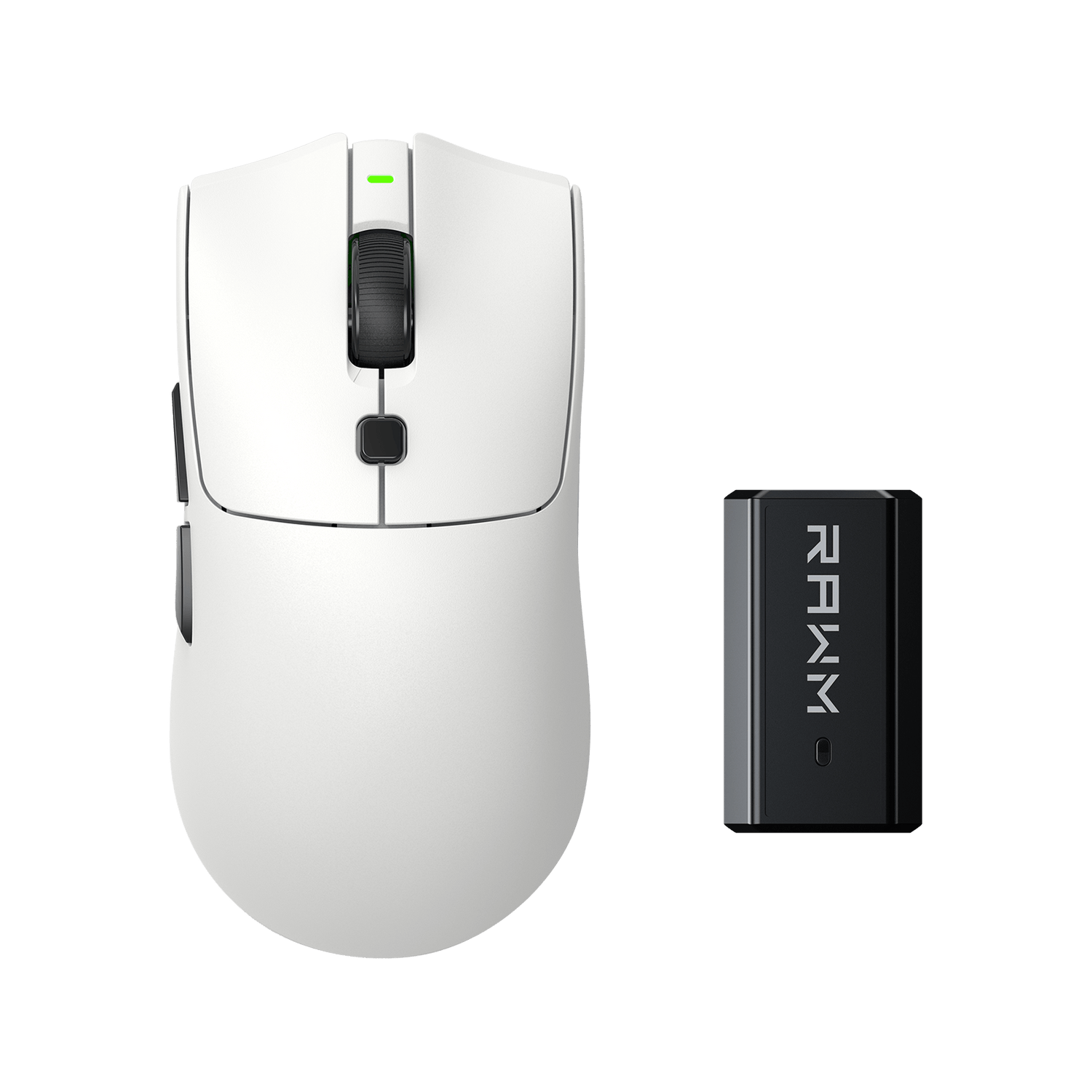
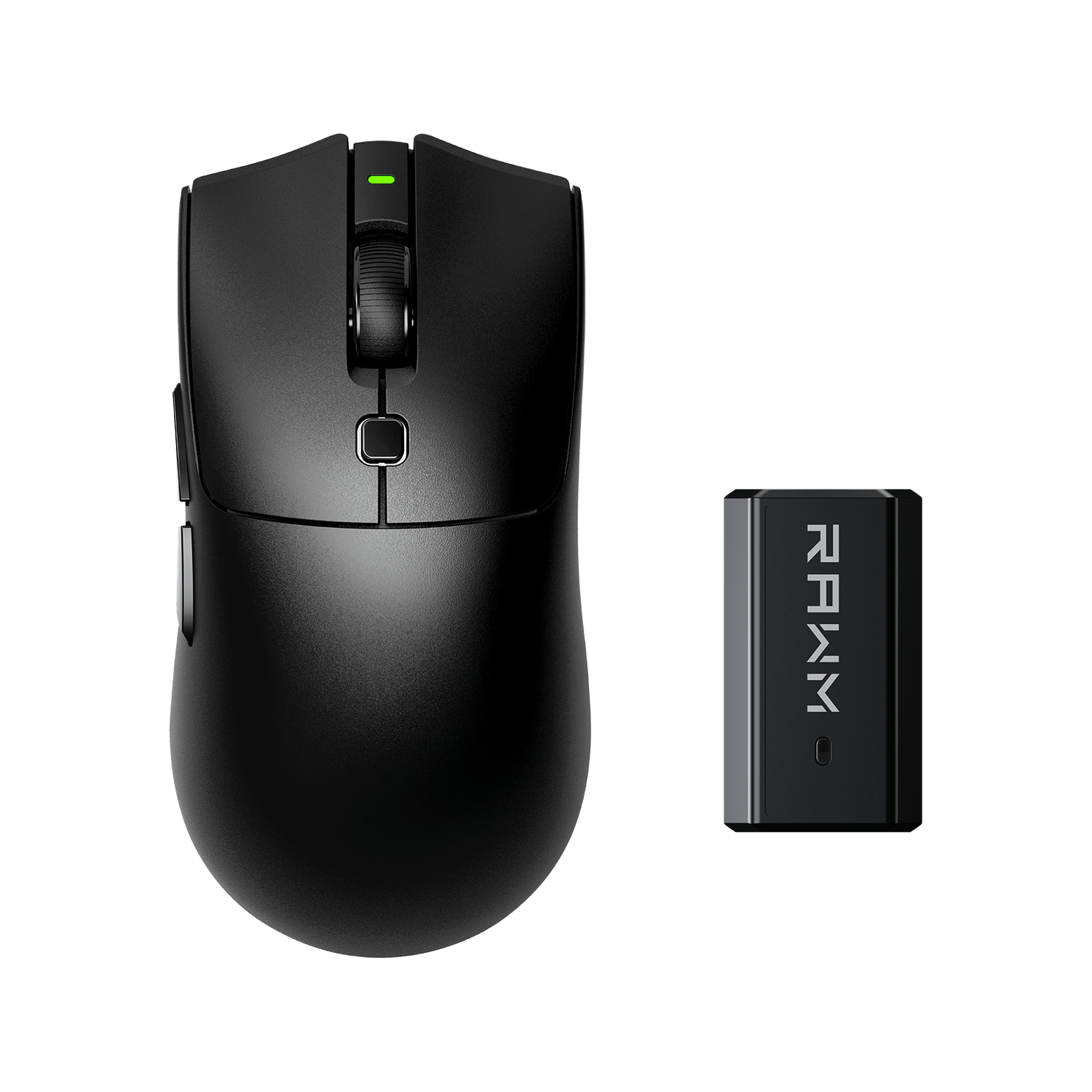
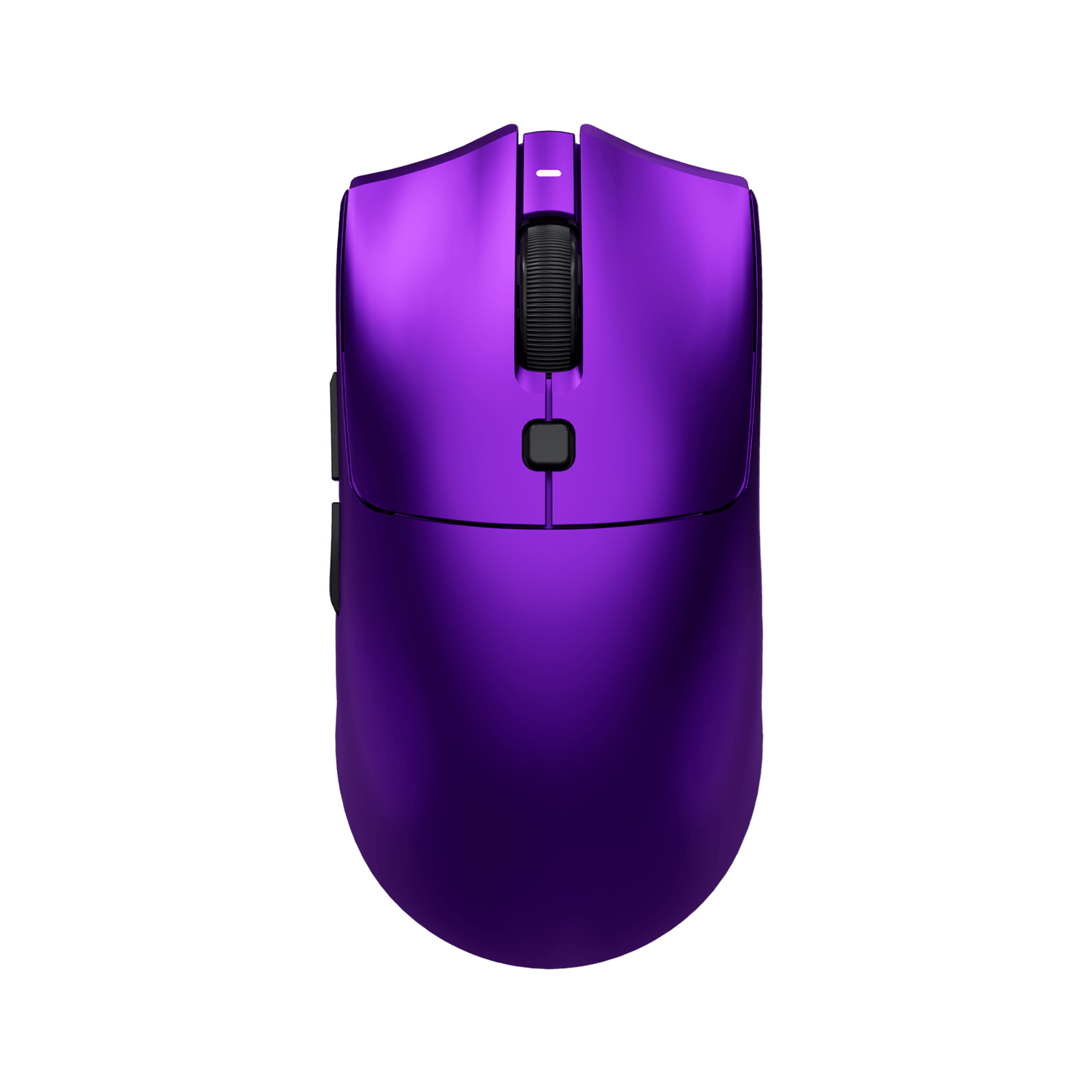
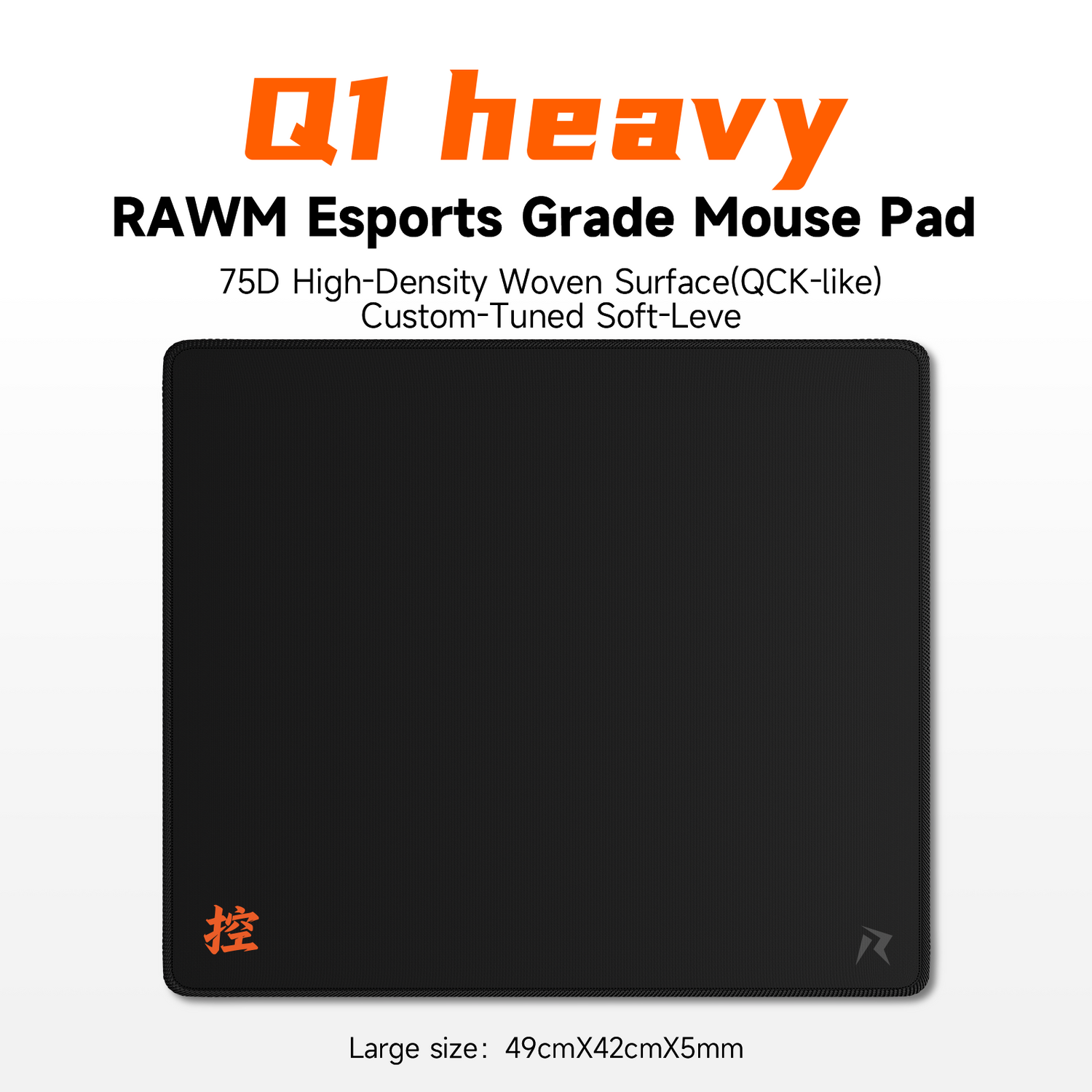
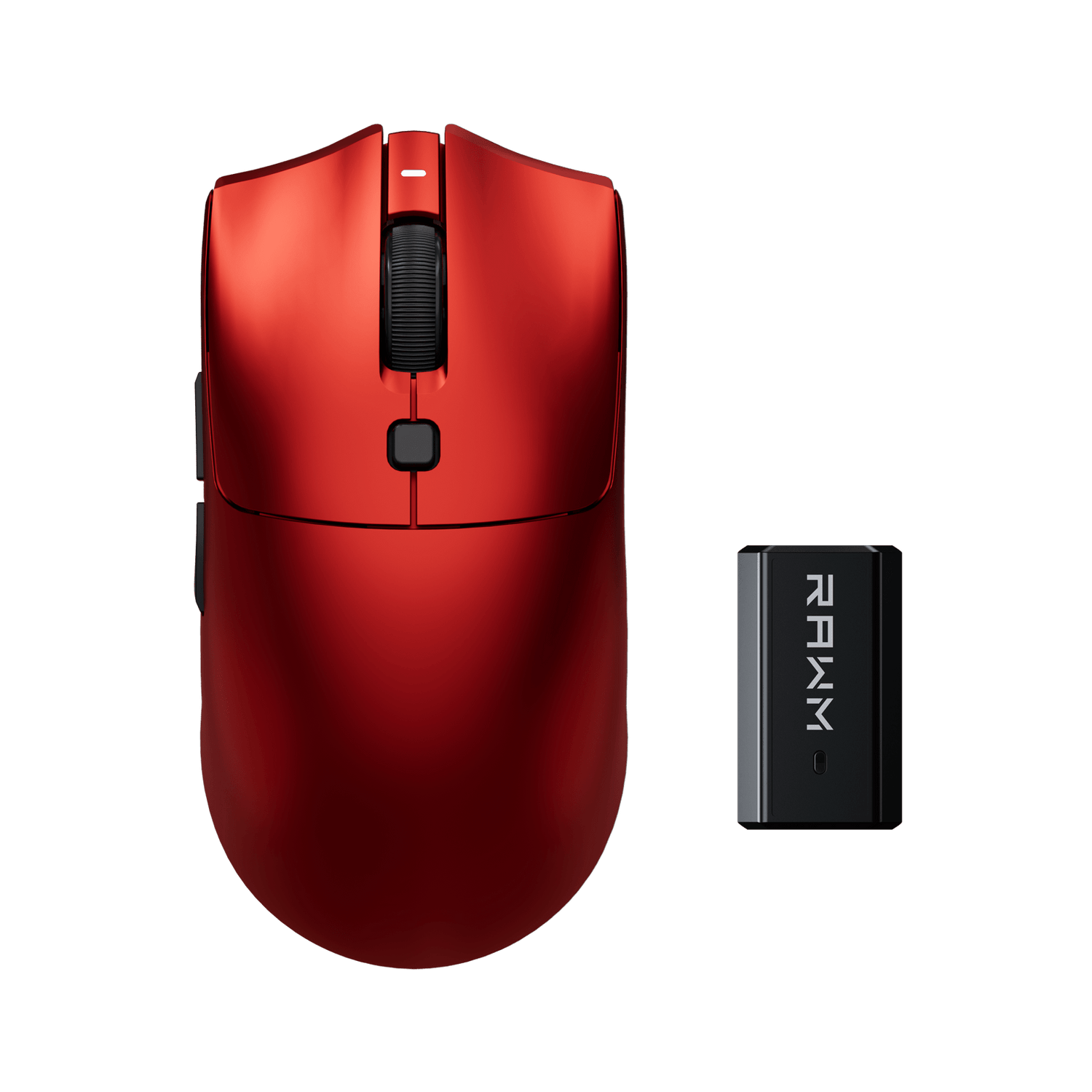
The Ultimate Gaming Mouse Guide (2026): Everything You Need to Know Before Buying
Choosing the right gaming mouse isn't just about buying the most expensive model or the one with the highest DPI. The best gaming mouse is the one that matches your hand size, grip style, favorite games, and personal preferences.
Whether you're a competitive FPS player looking for pixel-perfect precision, an MMO enthusiast who needs extra programmable buttons, or simply upgrading from an office mouse, this guide covers everything you need to know before making a purchase.
Inside this guide, you'll learn:
✅ What makes a gaming mouse different from a regular mouse
✅ How sensors, DPI, and polling rate actually affect gameplay
✅ How to choose the right shape and weight
✅ Wired vs wireless performance
✅ Which features really matter—and which are mostly marketing
✅ Expert recommendations for different games and play styles
By the end of this guide, you'll know exactly how to choose the gaming mouse that fits you—not just the one with the biggest specifications.
What Is a Gaming Mouse?
A gaming mouse is a computer mouse specifically designed for gaming. Compared to a regular mouse, it offers a more accurate sensor, lower input latency, faster polling rates, customizable buttons, onboard memory, and ergonomic designs that improve comfort and precision during gameplay.
Table of Contents
- Introduction
- What Is a Gaming Mouse?
- Gaming Mouse vs Regular Mouse
- How to Choose a Gaming Mouse
- Wired vs Wireless Gaming Mouse
- Gaming Mouse by Grip Style
-
Gaming Mouse Size & Shapes
- Gaming Mouse Sensors
- Gaming Mouse Switches
-
Gaming Mouse Weight
-
Polling Rate & Latency Explained
- Gaming Mouse Software & Customization
- Mouse Feet (Skates) & Mouse Pads
- How to Choose the Best Gaming Mouse for Your Needs
- Frequently Asked Questions
- How to Choose the Right Gaming Mouse – Final Buying Advice
Introduction
Walk into any gaming store or browse online marketplaces, and you'll quickly discover hundreds of gaming mice claiming to be the fastest, lightest, or most accurate ever made. Some advertise 30,000 DPI sensors, others boast 8K polling rates, while many focus on ultra-lightweight designs under 60 grams.
But here's the truth:
Most gamers don't need the highest specifications—they need the right mouse.
An expensive gaming mouse won't automatically improve your aim. Likewise, a lightweight mouse isn't always better for every player. Factors like hand size, grip style, game genre, and personal preference often have a much greater impact on your gaming performance than raw specifications.
Professional esports players understand this well. While many use premium gaming mice, their choices are based on consistency, comfort, and reliability—not simply the newest features.
This guide is designed to help both beginners and experienced gamers understand what actually matters when choosing a gaming mouse. We'll explain every important specification in simple language, separate marketing buzzwords from real performance benefits, and help you find the best gaming mouse for your individual needs.
Whether you're buying your very first gaming mouse or upgrading your current setup, this guide will give you the knowledge to make a confident decision.
Chapter 1
What Is a Gaming Mouse?
A gaming mouse is a computer mouse specifically designed to provide greater precision, faster response times, and better control than a standard office mouse. While both devices perform the same basic task—moving the cursor and clicking—they are built for completely different purposes.
For everyday activities like web browsing, document editing, or video streaming, almost any mouse will work well. Gaming introduces a different set of demands. Every movement, click, and reaction can directly affect performance, especially in competitive games where milliseconds matter.
Modern gaming mice are engineered with specialized hardware and software that allow players to react faster, track more accurately, and customize the mouse to match different games and personal preferences.
What Makes a Gaming Mouse Different?
Several key features separate gaming mice from traditional office mice.
While an office mouse focuses on comfort and simplicity, a gaming mouse is built to maximize responsiveness and consistency during gameplay.
Precision Is the Biggest Upgrade
The sensor is often considered the heart of a gaming mouse.
High-quality gaming sensors are capable of tracking extremely small hand movements with exceptional accuracy. This allows players to maintain precise crosshair placement in games such as:
- First-person shooters (FPS)
- Battle Royale games
- MOBA games
- RTS titles
- Tactical shooters
Modern flagship sensors can track movement with virtually no acceleration, smoothing, or prediction, ensuring that what you do with your hand is exactly what happens on screen.
Speed Matters
Gaming mice are also designed to reduce input delay.
Features like:
- High polling rates
- Low-latency wireless technology
- Optical or premium mechanical switches
- Lightweight shells
all work together to shorten the time between your physical movement and the action appearing in-game.
Although the difference may only be measured in milliseconds, competitive players often notice the improved responsiveness immediately.
Customization for Every Player
Unlike traditional mice, gaming mice allow extensive customization.
Most gaming software lets users adjust settings such as:
-
DPI levels
- Polling rate
- Lift-off distance
- Button assignments
- RGB lighting
- Macros
- Surface calibration
Many models also include onboard memory, allowing your settings to travel with the mouse even when switching computers.
Different Games Need Different Mice
Not every gaming mouse is designed for the same type of player.
Choosing the right mouse depends just as much on the games you play as it does on the hardware itself.
Is a Gaming Mouse Worth It?
If you primarily use your computer for browsing the web or office work, a gaming mouse may offer more features than you actually need.
However, if you regularly play PC games—or simply want smoother tracking, faster clicks, and greater customization—a quality gaming mouse is often one of the most noticeable upgrades you can make.
Today's gaming mice are also excellent productivity tools thanks to programmable buttons, ergonomic designs, and highly accurate sensors.
Quick Take: A gaming mouse isn't just about flashy RGB lighting. It's a precision tool designed to deliver faster response times, greater accuracy, and a more customizable experience for both gaming and everyday use.
Next Up
Now that you know what a gaming mouse is, the next question is whether it's actually different from the mouse you're already using.
Chapter 2
Gaming Mouse vs Regular Mouse: What's the Real Difference?
At first glance, a gaming mouse doesn't look very different from a regular office mouse. Both move the cursor, click buttons, and connect through USB or wireless technology. So why do gamers spend anywhere from $30 to over $150 on a dedicated gaming mouse?
The answer lies in performance.
While a standard mouse is designed for everyday tasks like browsing the web, editing documents, or working in spreadsheets, a gaming mouse is engineered for speed, precision, and consistency under demanding conditions.
For casual users, the differences may seem minor. For gamers, especially those playing fast-paced competitive titles, they can significantly affect comfort and performance.
Sensor Accuracy
The biggest difference is the sensor.
Office mice generally use inexpensive sensors that work well enough for normal computer use. They aren't designed for rapid movements or pinpoint accuracy.
Gaming mice use high-performance optical sensors capable of tracking extremely fast movements without skipping, acceleration, or smoothing.
This is especially important in games where aiming precision matters, such as:
- Counter-Strike 2
- Valorant
- Apex Legends
- Call of Duty
- Rainbow Six Siege
A high-quality sensor ensures that your hand movement is translated accurately onto the screen.
Polling Rate and Input Latency
Another major difference is how frequently the mouse reports its position to your computer.
Mouse TypeTypical Polling RateOffice Mouse125 HzGaming Mouse1000–8000 Hz
A higher polling rate means the cursor position is updated more frequently, reducing input delay.
While office users rarely notice this difference, gamers can often feel smoother tracking and faster response during quick movements.
Weight and Speed
Gaming mice are generally much lighter than traditional mice.
Many modern competitive gaming mice weigh between 45g and 70g, while office mice often exceed 90–120g.
Lower weight allows players to:
- make faster flick shots
- reduce wrist fatigue
- improve precision during long gaming sessions
This is one reason lightweight gaming mice have become increasingly popular in esports.
Extra Buttons and Customization
Office mice usually include two buttons and a scroll wheel.
Gaming mice often feature additional programmable buttons that can be customized for:
- weapon switching
- push-to-talk
- building shortcuts
- MMO abilities
- productivity shortcuts
Using manufacturer software, users can also customize:
- DPI
- polling rate
- RGB lighting
- macros
- onboard profiles
This flexibility makes gaming mice useful not only for gaming but also for creative work and productivity.
Durability
Gaming mice are typically built with more durable components.
Premium models often include switches rated for 60–100 million clicks, higher-quality scroll wheels, and stronger internal construction designed to withstand years of heavy use.
Office mice generally prioritize affordability over longevity.
Comfort Matters Too
Many people assume gaming mice are only designed for competitive gamers.
In reality, they are often more comfortable than standard mice because manufacturers invest heavily in ergonomics.
Depending on the model, you can choose:
- symmetrical designs
- ergonomic right-handed shapes
- ultralight shells
- larger palm-grip mice
- compact fingertip mice
Choosing the right shape can reduce hand fatigue during both gaming and everyday computer use.
Do Gaming Mice Actually Improve Performance?
For casual players, simply buying an expensive gaming mouse won't instantly improve skill.
However, a good gaming mouse can provide:
- more consistent tracking
- smoother aiming
- faster clicks
- lower latency
- greater comfort during long sessions
Combined with practice, these improvements create a better overall gaming experience.
Think of it like upgrading from an entry-level bicycle to a professional road bike—it won't make someone a champion overnight, but it removes equipment limitations and allows better performance.
Which One Should You Buy?
Choose a regular mouse if you:
- mainly browse the internet
- work with documents
- don't play PC games
Choose a gaming mouse if you:
- play games regularly
- value precision and responsiveness
- want customizable controls
- spend many hours at your computer
Even many professionals who rarely game choose gaming mice because of their superior sensors, comfort, and programmable buttons.
Quick Take: A gaming mouse isn't just marketing. Better sensors, lower latency, lighter weight, and extensive customization make it a meaningful upgrade for anyone who plays games regularly—or simply wants a more responsive computer experience.
Next Up
Now that you understand the differences between gaming and regular mice, it's time to learn how to choose the right one.
Chapter 3
How to Choose the Right Gaming Mouse
With hundreds of gaming mice available today, choosing the right one can feel overwhelming. Every manufacturer advertises higher DPI, faster polling rates, lighter weights, and the latest sensors—but not every specification matters equally.
The truth is that there isn't a single "best" gaming mouse for everyone. The right choice depends on your hand size, grip style, favorite games, and personal preferences.
Instead of focusing only on marketing numbers, start with the factors that actually affect your experience.
1. Shape Comes First
If there's one thing experienced gamers agree on, it's this:
Shape is more important than specifications.
Even the world's most advanced sensor won't help if the mouse feels uncomfortable in your hand.
A good shape should allow you to maintain a relaxed grip without straining your fingers or wrist during long gaming sessions.
When comparing two mice with similar performance, the one that fits your hand better will almost always provide the better experience.
Pro Tip: Never choose a mouse based solely on RGB lighting or specifications. Comfort should always come first.
2. Consider Your Grip Style
Most players naturally hold their mouse in one of three ways:
-
Palm Grip – Your entire hand rests on the mouse for maximum comfort.
-
Claw Grip – Your palm touches the rear while your fingers arch for quicker movements.
-
Fingertip Grip – Only your fingertips touch the mouse, offering maximum agility.
Different mouse shapes are designed to suit different grip styles.
Choosing a mouse that matches the way you naturally hold it will improve both comfort and control.
3. Pick the Right Size
A mouse that's too small can feel unstable.
One that's too large may limit movement and become uncomfortable over time.
When choosing a gaming mouse, consider:
- Hand length
- Hand width
- Grip style
Manufacturers often classify mice as Small, Medium, or Large, making it easier to find a comfortable fit.
4. Weight Is Personal Preference
Gaming mice have become much lighter over the past few years.
Today you'll find models ranging from under 40g to more than 100g.
Generally speaking:
- Lightweight mice are easier to move quickly.
- Heavier mice may feel more stable and controlled.
There isn't a universally "perfect" weight. FPS players often prefer lighter mice, while some MMO or productivity users enjoy the extra stability of a slightly heavier design.
5. Don't Chase the Highest DPI
One of the biggest misconceptions is that higher DPI automatically means a better mouse.
In reality, most gamers play somewhere between 400 and 1600 DPI.
Extremely high DPI values—such as 26,000 or even 42,000—mainly demonstrate what the sensor is capable of rather than what most people actually use.
Instead of focusing on the maximum DPI, look for a sensor that offers consistent and accurate tracking.
6. Wired or Wireless?
Modern wireless gaming mice have improved dramatically.
Thanks to advances in low-latency wireless technology, many premium wireless models now perform just as well as wired mice in competitive gaming.
When choosing between the two, consider factors such as:
- Battery life
- Charging convenience
- Cable preference
- Budget
We'll compare wired and wireless gaming mice in detail later in this guide.
7. Choose Features That Match Your Games
Not every game requires the same type of mouse.
Here are some general recommendations:
Game GenreWhat to Look ForFPSLightweight, accurate sensor, symmetrical shapeMOBAComfortable shape and programmable buttonsMMOMultiple side buttons and onboard profilesRTSResponsive clicks and customizable shortcutsCasual GamingBalanced design with all-around comfort
The best gaming mouse is the one that fits the games you actually play.
Focus on the Features That Matter
It's easy to get distracted by impressive specifications or flashy marketing.
In reality, these four factors will have the biggest impact on your experience:
- Shape
- Comfort
- Sensor quality
- Weight
Everything else—including RGB lighting, extremely high DPI, or decorative features—should be considered secondary.
Quick Take
Choosing the right gaming mouse isn't about buying the most expensive model or the one with the highest specifications. It's about finding a mouse that fits your hand, matches your playstyle, and feels comfortable during every gaming session.
Once you've narrowed down your options based on shape and size, you can then compare sensors, weight, connectivity, and additional features.
Next Up
Now that you know how to choose a gaming mouse, let's look at one of the most important factors that affects comfort and aiming performance:
Chapter 4
Wired vs Wireless Gaming Mouse: Which Is Better?
For years, wired gaming mice were considered the only serious option for competitive gaming. Wireless models often suffered from noticeable input lag, unstable connections, and short battery life, making them difficult to recommend for fast-paced games.
Today, that has completely changed.
Modern wireless gaming mice have reached a point where many professional esports players use them in tournaments. Advances in wireless technology have dramatically reduced latency while improving battery life and reliability.
So, should you choose a wired or wireless gaming mouse? The answer depends on your priorities.
Wired Gaming Mice
A wired mouse connects directly to your PC using a USB cable.
For many years, this was considered the gold standard because the connection was simple, stable, and required no charging.
Pros
- No battery to charge
- Consistent performance
- Usually more affordable
- Plug-and-play simplicity
Cons
- Cable drag can affect movement
- Less freedom on the desk
- Cable management may be needed
Although modern mouse cables are much lighter and more flexible than they were a few years ago, some players still notice resistance during fast flicks.
Wireless Gaming Mice
Wireless gaming mice communicate through a dedicated 2.4GHz USB receiver instead of Bluetooth.
Unlike Bluetooth, gaming-grade wireless connections are optimized for speed and extremely low latency.
Today's premium wireless mice offer:
- Stable connections
- Near-instant response
- Long battery life
- Lightweight designs
Many flagship models now last 60–100+ hours on a single charge, making battery life much less of a concern than it once was.
Is Wireless Slower?
This is probably the biggest myth surrounding gaming mice.
Years ago, the answer was yes.
Today, not necessarily.
Premium wireless gaming mice from leading brands can deliver performance that is virtually indistinguishable from their wired counterparts in real-world gaming.
For the vast majority of players—even those competing in ranked games—the difference is effectively impossible to notice.
The deciding factor is no longer latency but rather convenience, battery life, and price.
Battery Life
Battery performance varies by model and usage.
Features like RGB lighting, high polling rates, and always-on wireless connectivity can reduce battery life.
Many gaming mice now support:
- USB-C fast charging
- Recharge while playing
- Automatic sleep mode
- Battery-saving performance modes
If you don't mind charging your mouse every few weeks, battery life is unlikely to be an issue.
Which One Is Better for FPS Games?
Both options perform extremely well.
However, many FPS players prefer wireless mice because they eliminate cable drag, allowing smoother and more natural movements.
That extra freedom can make fast flicks and large arm movements feel more effortless.
If you already use a mouse bungee, however, the difference becomes much smaller.
Price Comparison
Wireless technology usually increases the cost of a gaming mouse.
Entry-level wired models often provide excellent value, while flagship wireless models typically command a premium due to:
- Rechargeable batteries
- Wireless chips
- Additional engineering
- Lightweight construction
If you're shopping on a budget, a wired gaming mouse may offer the better price-to-performance ratio.
Which Should You Choose?
A wired gaming mouse is a great choice if you:
- want the lowest possible cost
- never want to think about charging
- prefer a simple plug-and-play setup
A wireless gaming mouse is ideal if you:
- value unrestricted movement
- want a cleaner desk setup
- don't mind charging occasionally
- are willing to spend a little more
For most gamers in 2026, both options are excellent. The decision comes down to convenience and personal preference rather than raw performance.
Quick Take: Modern wireless gaming mice have effectively closed the performance gap with wired models. Unless you're shopping on a tight budget or simply prefer a cable, wireless is now a practical choice for nearly every type of gamer.
Next Up
Now that you've chosen between wired and wireless, the next step is finding a mouse that actually fits your hand.
Chapter 5
Gaming Mouse Grip Styles Explained
One of the biggest mistakes people make when buying a gaming mouse is focusing only on specifications like DPI or polling rate while overlooking how they actually hold the mouse.
In reality, your grip style has a much greater impact on comfort and control than most technical specifications.
The right mouse should feel natural in your hand, allowing you to play for hours without discomfort while maintaining accurate and consistent movements.
Most gamers naturally fall into one of three primary grip styles.
Palm Grip
Palm grip is the most relaxed and comfortable way to hold a mouse.
With this grip, your entire palm rests on the back of the mouse while your fingers lie comfortably across the buttons.
Best For
- Long gaming sessions
- Casual gaming
- Productivity
- Large hands
Advantages
- Excellent comfort
- Stable tracking
- Reduced hand fatigue
- Natural wrist position
Drawbacks
- Slightly slower flick movements
- Less finger precision than other grip styles
Players who prefer RPGs, strategy games, or general everyday use often find palm grip the most comfortable option.
Claw Grip
Claw grip is one of the most popular choices among competitive gamers.
Instead of resting the entire hand on the mouse, the palm only touches the rear while the fingers arch upward, creating a claw-like shape.
This grip allows faster clicking and quicker directional changes.
Best For
- FPS games
- MOBA games
- Fast-paced competitive titles
Advantages
- Faster reactions
- Better click control
- Quick flick shots
- High precision
Drawbacks
- Can cause finger fatigue during long sessions
- Requires a mouse with good rear support
Many professional esports players naturally use some variation of the claw grip because it balances speed and precision exceptionally well.
Fingertip Grip
Fingertip grip is exactly what it sounds like.
Only the fingertips touch the mouse while the palm remains completely off the shell.
This creates maximum freedom of movement.
Best For
- Lightweight mice
- Fast aiming
- High mobility
- Small to medium-sized mice
Advantages
- Extremely agile
- Quick directional changes
- Excellent micro-adjustments
- Minimal friction
Drawbacks
- Less overall stability
- Can become tiring for some users
- Requires greater finger control
Fingertip grip is often favored by experienced FPS players who prioritize speed over comfort.
Grip Style Comparison
Grip Style ComfortSpeedPrecisionRecommended Mouse
Palm⭐⭐⭐⭐⭐⭐⭐⭐⭐⭐⭐⭐Ergonomic, medium to large
Claw⭐⭐⭐⭐⭐⭐⭐⭐⭐⭐⭐⭐⭐⭐Medium-sized, versatile
Fingertip⭐⭐⭐⭐⭐⭐⭐⭐⭐⭐⭐⭐Small, lightweight
Which Grip Style Is Best?
There isn't a universally "best" grip style.
Each offers its own advantages depending on the games you play and what feels most natural to you.
Many players also switch slightly between grip styles without realizing it, especially during different types of gameplay.
For example:
- Relaxed browsing may resemble a palm grip.
- Competitive matches often shift toward a claw grip.
- Quick aiming situations may naturally become fingertip grip.
Rather than forcing yourself to adopt a specific grip, it's usually better to choose a mouse that complements the way you already play.
💡 Expert Tip
Don't buy a mouse because a professional player uses it. Their hand size, grip style, and preferences may be completely different from yours. A mouse that feels comfortable in your own hand will almost always deliver better long-term performance.
Can You Change Your Grip Style?
Yes—but it takes time.
Some players intentionally switch grip styles when changing to a different mouse shape or transitioning to competitive gaming.
However, unless your current grip causes discomfort, there's usually no need to retrain yourself.
Instead, choose a mouse designed for your natural grip style.
You'll adapt much faster and enjoy a more comfortable experience.
Quick Take
Your grip style influences almost every aspect of how a gaming mouse feels, from aiming accuracy to long-term comfort.
Before comparing sensors, DPI, or RGB lighting, identify how you naturally hold your mouse. Once you understand your grip style, narrowing down the right gaming mouse becomes much easier.
Next Up
Now that you know how you hold your mouse, the next step is making sure it fits your hand.
Chapter 6: Gaming Mouse Size & Shape – How to Find the Perfect Fit
Now that you understand your preferred grip style, the next step is finding a mouse that actually fits your hand. Even the most advanced gaming mouse can feel uncomfortable or perform poorly if its size and shape don't match your hand.
Many gamers focus on specifications like DPI, polling rate, or sensor model while overlooking the single factor they'll notice every time they play: comfort.
The right size and shape can improve precision, reduce fatigue, and make long gaming sessions far more enjoyable.
Why Mouse Size Matters
Unlike keyboards, a gaming mouse is in constant contact with your hand. If the size is wrong, your grip becomes unnatural, your wrist works harder, and precise aiming becomes more difficult.
A mouse that's too large may cause:
- Reduced fingertip control
- Slower flick shots
- Increased wrist fatigue
- Difficulty reaching side buttons
A mouse that's too small may lead to:
- Cramped fingers
- Less palm support
- Unstable grip
- Reduced comfort during extended use
Finding the right balance helps your hand remain relaxed while maintaining full control.
Measuring Your Hand
The easiest way to estimate the ideal mouse size is to measure your hand.
You'll need two measurements:
Hand Length
Measure from the tip of your middle finger to the bottom of your palm.
Hand Width
Measure across the widest part of your palm without including your thumb.
These two numbers provide a good starting point when comparing different mouse sizes.
General Mouse Size Recommendations
Although there are no universal standards, most gaming mice fall into three categories.
Hand SizeRecommended Mouse SizeSmallCompactMediumMediumLargeLarge or Ergonomic
Remember that grip style also affects sizing. A fingertip player may intentionally choose a smaller mouse, while a palm grip user often prefers a larger design.
Understanding Mouse Shapes
Size is only part of the equation. Shape has an even greater impact on comfort and control.
Gaming mice generally fall into two major categories.
Symmetrical Mice
Symmetrical mice feature a balanced design that works well for many grip styles.
Advantages include:
- Excellent for claw grip
- Popular among FPS players
- Easier to reposition quickly
- Comfortable for both left- and right-handed versions (depending on design)
Many esports professionals prefer symmetrical mice because they allow greater freedom of movement.
Ergonomic Mice
Ergonomic mice are designed to follow the natural curve of the hand.
Advantages include:
- Better palm support
- Reduced wrist fatigue
- Comfortable during long gaming sessions
- Excellent for productivity and mixed use
These designs are especially popular among users with larger hands or those who primarily use a palm grip.
Mouse Hump Position
One of the most overlooked aspects of mouse design is the position of the hump.
Front Hump
A front-focused hump encourages fingertip control and fast movements.
Often preferred for:
- Fingertip grip
- Aggressive aiming
- Fast-paced FPS games
Center Hump
A centered hump provides balanced support and works well for a wide variety of grip styles.
Ideal for users who frequently switch between gaming genres.
Rear Hump
A rear hump offers additional palm support and helps stabilize the hand.
Best suited for:
- Palm grip
- Relaxed gaming
- Long sessions
- Larger hands
Side Shape and Grip Comfort
The shape of the mouse sides also affects handling.
Some mice feature deep side grooves that improve grip security, while others have flatter sides that allow greater flexibility in finger placement.
Textured side grips or rubberized coatings can further improve control, particularly during long gaming sessions.
Ultimately, the best side profile depends on personal preference.
Button Placement
Comfort isn't only about shape—button placement matters too.
The side buttons should be easy to reach without forcing your thumb into an awkward position.
Similarly, the main buttons should allow your fingers to rest naturally without excessive stretching or curling.
Small ergonomic details like these can make a significant difference over time.
Weight Distribution
Two mice may have exactly the same weight but feel completely different.
That's because weight distribution affects how a mouse moves.
A well-balanced mouse feels predictable during quick flicks and controlled tracking, while poor weight distribution can make movements feel inconsistent.
Many modern lightweight gaming mice are carefully engineered to keep the center of gravity near the middle of the shell for a more natural feel.
There Is No Universal "Best Shape"
Perhaps the biggest misconception in the gaming community is that there's one perfect mouse shape.
In reality, professional players use an enormous variety of mice.
Some prefer compact symmetrical designs.
Others perform best with large ergonomic models.
Your favorite game, grip style, hand size, and personal comfort all influence which shape feels right.
The best gaming mouse isn't necessarily the one most professionals use—it's the one that feels like a natural extension of your hand.
Key Takeaways
When choosing the right gaming mouse size and shape:
- Measure your hand before buying.
- Match the mouse to your preferred grip style.
- Consider both overall size and shell shape.
- Pay attention to hump position and side contours.
- Make sure the buttons are easy to reach.
- Remember that comfort almost always outweighs specifications.
A mouse that fits your hand properly will not only feel more comfortable but can also improve consistency, reduce fatigue, and help you perform better over time.
Next Up
Now that you've found the right size and shape, it's time to look inside the mouse and understand the technology that powers modern gaming performance.
Chapter 7: Gaming Mouse Sensors Explained
A gaming mouse is only as good as the sensor inside it.
The sensor is responsible for tracking every movement you make, translating your hand motion into precise cursor movement on screen. Whether you're flicking across the map in a tactical shooter or making tiny adjustments for a sniper shot, the sensor determines how accurately those movements are reproduced.
Fortunately, modern gaming mouse sensors have become incredibly advanced. Today's flagship optical sensors offer exceptional precision, low latency, and reliable tracking that far exceed the needs of most players.
Understanding the key specifications can help you focus on what actually matters—and avoid paying extra for marketing numbers that provide little real-world benefit.
Optical vs. Laser Sensors
Gaming mice generally use one of two sensor technologies: optical or laser.
Optical Sensors
Optical sensors use an LED to illuminate the surface beneath the mouse. They capture thousands of images every second and calculate movement by comparing changes between those images.
Advantages include:
- More consistent tracking
- Better accuracy for gaming
- Lower lift-off distance
- Less unwanted acceleration
- Excellent compatibility with mouse pads
For these reasons, virtually every modern esports gaming mouse uses an optical sensor.
Laser Sensors
Laser sensors use infrared laser light instead of an LED.
They can track on a wider variety of surfaces, including glass in some cases, but they often introduce small amounts of acceleration or inconsistent tracking.
While laser sensors remain useful for office environments, they have largely disappeared from competitive gaming mice.
For gaming, optical sensors are the preferred choice.
DPI vs. CPI – What's the Difference?
One of the most misunderstood gaming mouse specifications is DPI.
Technically speaking:
-
CPI (Counts Per Inch) measures how many tracking counts the sensor reports for every inch the mouse moves.
-
DPI (Dots Per Inch) originally refers to printing resolution.
In the gaming industry, however, the two terms are used interchangeably. When a mouse advertises 26,000 DPI, it is effectively referring to its CPI setting.
Higher DPI makes the cursor move farther with less physical movement.
However, higher does not necessarily mean better.
Most professional FPS players use settings between 400 and 1600 DPI, prioritizing consistency and control over extreme sensitivity.
Tracking Speed (IPS)
IPS stands for Inches Per Second.
This specification measures how fast the sensor can move while still maintaining accurate tracking.
For example:
- 650 IPS means the mouse can accurately track movements up to 650 inches per second.
Modern flagship sensors typically exceed 650 IPS, which is far beyond the speed any human can realistically achieve.
For most gamers, anything above 400 IPS is already more than sufficient.
Maximum Acceleration (G)
Acceleration ratings describe how much sudden force a sensor can withstand before tracking becomes inaccurate.
Most premium sensors support around 50G–70G.
Again, these numbers greatly exceed real-world gameplay.
Unless you're making extremely aggressive flicks in competitive shooters, you'll never reach these limits.
Lift-Off Distance (LOD)
Lift-Off Distance (LOD) refers to the height at which the sensor stops tracking after the mouse is lifted from the surface.
Lower LOD is generally preferred.
A low lift-off distance allows players to reposition the mouse without unintentionally moving the cursor.
This is especially important for:
- Low-sensitivity FPS players
- Large mouse pad users
- Competitive esports
Many premium gaming mice now allow users to adjust LOD through software.
Motion Sync
Some modern gaming mice include a feature called Motion Sync.
Motion Sync synchronizes sensor data with the USB polling interval before transmitting movement information to the PC.
In theory, this creates smoother and more consistent tracking.
In practice, the difference is extremely small.
Many professional players cannot reliably distinguish Motion Sync from standard tracking during normal gameplay.
Rather than viewing Motion Sync as a must-have feature, consider it a refinement rather than a major performance upgrade.
Sensor Smoothing
Sensor smoothing is a filtering process that averages movement data.
While smoothing can make cursor movement appear more stable, excessive smoothing introduces slight input delay.
Modern flagship sensors generally avoid noticeable smoothing at normal DPI settings.
This helps preserve the direct, responsive feel that competitive players expect.
Angle Snapping
Angle Snapping automatically corrects slightly crooked mouse movements into straighter lines.
While this can be useful for graphic design or productivity work, it is generally undesirable for gaming because it changes your intended movement.
Most gaming mice disable Angle Snapping by default.
Do You Really Need 30,000 DPI?
Manufacturers often advertise increasingly high DPI numbers:
- 20,000 DPI
- 26,000 DPI
- 30,000 DPI
- 42,000 DPI
While these figures look impressive on product pages, they have very little practical impact.
Extremely high DPI settings make cursor control difficult for most users.
What matters far more is:
- Consistent tracking
- Low latency
- Reliable firmware
- Stable wireless performance
- High-quality implementation
A well-tuned 26K sensor will almost always outperform a poorly optimized 40K sensor.
Premium Sensors You'll Commonly See
Many high-end gaming mice use sensors developed by PixArt, one of the industry's leading sensor manufacturers.
While sensor choice matters, implementation is equally important. The same sensor can perform differently depending on firmware tuning, wireless optimization, and overall mouse design.
Key Takeaways
When evaluating a gaming mouse sensor, focus on the features that actually improve gameplay:
- Choose an optical sensor for the best gaming performance.
- Don't chase extremely high DPI numbers.
- Low lift-off distance benefits competitive FPS players.
- IPS and acceleration ratings are important, but modern premium sensors already exceed real-world requirements.
- Motion Sync and other advanced features offer small refinements rather than dramatic improvements.
- Overall sensor implementation matters more than specifications alone.
For most gamers, nearly every modern flagship optical sensor delivers more performance than they will ever need. Comfort, shape, weight, and build quality often have a greater impact on the gaming experience than sensor specifications alone.
Next Up
Now that you understand how gaming mouse sensors work, the next step is learning about another critical component that affects every click you make.
Chapter 8: Gaming Mouse Switches Explained
Every movement in a game starts with the sensor, but every action begins with a click.
Whether you're firing in a first-person shooter, rapidly building in a battle royale, or issuing hundreds of commands in an RTS game, your gaming mouse switches determine how every click feels and performs.
Although they're hidden inside the mouse, switches play a major role in responsiveness, durability, and overall user experience.
Understanding how they work can help you choose a mouse that matches your gaming style.
What Is a Mouse Switch?
A mouse switch is the mechanical component located beneath each button.
Every time you press the left or right mouse button, the switch completes an electrical circuit, sending the click signal to your computer.
Modern gaming mice typically contain:
- Left Click Switch
- Right Click Switch
- Middle Click Switch
- Side Button Switches
The primary left and right switches receive by far the most use and have the biggest impact on the overall clicking experience.
Mechanical vs. Optical Mouse Switches
Today's gaming mice mainly use two switch technologies.
Mechanical Switches
Mechanical switches have been the industry standard for many years.
They rely on physical metal contacts that touch when pressed.
Advantages include:
- Crisp tactile feedback
- Familiar click feel
- Wide variety of switch options
- Proven long-term reliability
Potential drawbacks:
- Physical wear over time
- Possibility of double-click issues after extensive use
Many gamers still prefer the feel of a high-quality mechanical switch.
Optical Switches
Optical switches replace physical electrical contacts with infrared light.
Instead of metal contacts touching, the click interrupts a beam of light, allowing the mouse to detect the input.
Advantages include:
- Extremely fast response
- No electrical contact wear
- Better resistance to double-click problems
- Longer expected lifespan
Because there is almost no electrical degradation, optical switches have become increasingly popular in premium gaming mice.
Do Optical Switches Feel Different?
Yes—but not necessarily better.
Mechanical switches usually provide:
- Sharper tactile feedback
- More pronounced click sensation
- Slightly louder sound
Optical switches often feel:
- Lighter
- Smoother
- Faster to actuate
- Slightly softer depending on implementation
The overall feel depends heavily on how the manufacturer tunes the switch and mouse shell.
A well-designed optical switch can feel just as satisfying as a premium mechanical switch.
What Is Double Clicking?
One of the most common long-term mouse issues is unintended double-clicking.
Instead of registering one click, the mouse mistakenly sends two.
This usually happens because mechanical switch contacts wear out after years of repeated use.
Modern optical switches virtually eliminate this problem because there are no metal contacts that gradually deteriorate.
Switch Lifespan
Manufacturers often advertise switch durability using click ratings.
Common examples include:
Rated LifespanTypical Usage20 Million ClicksEntry-level mice50 Million ClicksMid-range gaming mice80 Million ClicksPremium mechanical switches100 Million+ ClicksOptical or flagship switches
While higher ratings generally indicate improved durability, they don't guarantee a better click feel.
The quality of implementation remains just as important.
Click Latency
Click latency measures how quickly a mouse registers your click after pressing the button.
Modern gaming mice typically achieve click latency well below one millisecond.
Differences between premium models are often measured in fractions of a millisecond.
For most gamers, factors such as comfort, consistency, and switch feel have a much greater impact than tiny latency differences.
Debounce Time
Mechanical switches naturally produce small electrical vibrations when pressed.
To prevent multiple unintended inputs, firmware waits briefly before confirming the click.
This delay is known as debounce time.
Lower debounce settings can reduce click latency but may increase the risk of accidental double-clicks on worn mechanical switches.
Optical switches require little or no debounce because they don't rely on physical electrical contacts.
Popular Mouse Switch Brands
Several manufacturers produce switches commonly found in gaming mice.
Omron
One of the most recognizable names in the gaming industry.
Known for:
- Balanced tactile feedback
- Wide availability
- Long history in gaming mice
Huano
Often preferred by competitive FPS players.
Characteristics include:
- Crisp click feel
- Slightly heavier actuation
- Excellent consistency
TTC
TTC switches have become increasingly common in premium wireless gaming mice.
They're known for:
- Smooth operation
- Quiet click sound
- Modern engineering
Kailh
Kailh produces a wide variety of gaming switches with different click characteristics.
Many enthusiasts appreciate their sharp tactile feedback.
Which Switch Is Best?
There isn't a universally "best" switch.
Instead, the right choice depends on your preferences.
If you prefer:
Light, effortless clicking
- Optical switches
- TTC
- Some Omron variants
Crisp, tactile feedback
- Huano
- Kailh
- Premium mechanical switches
Maximum durability
- Optical switches
Ultimately, comfort matters far more than brand names alone.
Should You Choose Mechanical or Optical?
For most gamers:
Choose mechanical switches if you:
- Prefer traditional click feel
- Enjoy stronger tactile feedback
- Value familiar responsiveness
Choose optical switches if you:
- Want maximum durability
- Want to minimize double-click issues
- Prefer the latest switch technology
Both technologies are excellent when implemented well.
Key Takeaways
When evaluating gaming mouse switches:
- Mechanical switches remain popular for their tactile feel.
- Optical switches improve durability and reduce double-click problems.
- Click feel varies between manufacturers.
- Higher click ratings don't always mean better performance.
- Switch implementation is just as important as switch type.
- Choose the switch that feels most comfortable rather than chasing specifications.
For most gamers, a well-designed switch—whether mechanical or optical—will provide years of reliable performance and consistent responsiveness.
Next Up
Now that you understand how switches affect every click, it's time to look at another factor that has become increasingly important in modern gaming mice.
Chapter 9: Gaming Mouse Weight Guide – Does Lighter Always Mean Better?
For years, gaming mice continued to get heavier as manufacturers added adjustable weight systems, extra buttons, and larger batteries. A mouse weighing over 120 grams was once considered completely normal.
Today, the trend has shifted dramatically.
Many of the most popular gaming mice now weigh less than 60 grams, with some ultralight models even dropping below 40 grams.
But does lighter always mean better?
The answer depends on the games you play, your grip style, and your personal preference.
Why Mouse Weight Matters
Every movement you make requires your hand to accelerate, stop, and reposition the mouse.
A lighter mouse requires less physical effort to move, making quick reactions feel easier and reducing fatigue during long gaming sessions.
Weight influences:
- Flick speed
- Tracking precision
- Hand fatigue
- Control
- Overall comfort
Unlike specifications such as DPI or polling rate, mouse weight is something you'll notice immediately.
The Rise of Lightweight Gaming Mice
Competitive esports helped popularize lightweight designs.
Professional FPS players realized that reducing mouse weight made fast movements feel more effortless while also lowering strain during extended practice sessions.
As a result, manufacturers began developing increasingly lighter mice without sacrificing performance.
Advances in battery technology, stronger lightweight plastics, and optimized internal structures have made it possible to build durable wireless mice weighing under 60 grams.
Weight Categories
Although there are no official standards, gaming mice generally fall into four categories.
WeightCategoryUnder 60gUltralight60–75gLightweight75–90gStandardOver 90gHeavy
Each category has its own advantages depending on the player.
Benefits of Lightweight Mice
Ultralight mice have become especially popular among competitive FPS players.
Advantages include:
- Faster flick shots
- Easier micro-adjustments
- Reduced wrist fatigue
- Improved comfort during long sessions
- Less effort when lifting and repositioning
These benefits are particularly noticeable for players using low sensitivity with large mouse pads.
Are Heavier Mice Bad?
Not at all.
While lightweight mice dominate esports headlines, heavier mice still offer several advantages.
Many players appreciate the additional stability that comes with extra weight.
Benefits of heavier mice include:
- Smoother cursor control
- More stable tracking
- Less accidental overcorrection
- Better suited for slower-paced games
- Often feels more premium in hand
For genres like MMOs, MOBAs, strategy games, or productivity work, a slightly heavier mouse may actually feel more comfortable.
Weight and Grip Style
Your preferred grip style also affects the ideal mouse weight.
Palm Grip
Palm grip users often prefer slightly heavier mice because the larger hand contact area provides excellent control and stability.
Claw Grip
Claw grip players usually prefer medium-weight or lightweight mice that balance speed with precision.
Fingertip Grip
Fingertip users generally benefit the most from ultralight designs, since they rely heavily on rapid finger movements and frequent repositioning.
Weight Distribution Matters Too
Two mice can weigh exactly the same but feel completely different.
That's because overall balance is just as important as the total weight.
A well-balanced mouse feels natural during movement, while poor weight distribution can make a mouse feel heavier than it actually is.
Manufacturers carefully position batteries, PCBs, and internal components to keep the center of gravity close to the middle of the mouse.
Good weight distribution improves:
- Flick consistency
- Tracking stability
- Overall handling
Do Honeycomb Shells Still Matter?
Several years ago, many manufacturers reduced weight by cutting large honeycomb holes into the mouse shell.
While effective, these designs divided opinions.
Some gamers loved the reduced weight, while others disliked the appearance or the way the shell felt in hand.
Today, improved engineering allows many gaming mice to achieve ultralight weights with fully enclosed shells.
As a result, solid-shell lightweight mice have become increasingly popular, offering a cleaner appearance without sacrificing performance.
Does a Lighter Mouse Improve Aim?
Not necessarily.
A lighter mouse can make fast movements easier, but it won't automatically improve your accuracy.
Good aim depends on many factors, including:
- Muscle memory
- Sensitivity settings
- Mouse pad
- Grip style
- Practice
Many professional players use mice between 50 and 70 grams, but there are still successful competitors using heavier models.
Comfort and consistency always matter more than chasing the lowest possible weight.
Should Beginners Buy an Ultralight Mouse?
For most players, a lightweight mouse in the 60–75 gram range offers an excellent balance between speed, control, and comfort.
Ultralight mice are ideal for competitive FPS enthusiasts, but they're not the only good option.
If you're primarily playing RPGs, MMOs, MOBAs, or using your mouse for both gaming and work, choosing a mouse based on shape and ergonomics is often more important than reducing every gram.
Key Takeaways
When considering gaming mouse weight:
- Lighter mice reduce fatigue and make quick movements easier.
- Weight alone doesn't determine gaming performance.
- Balance and weight distribution are just as important as total weight.
- Palm grip users may prefer slightly heavier mice, while fingertip players often benefit from ultralight designs.
- Modern lightweight wireless mice no longer require honeycomb shells.
- Choose the weight that feels natural for your playstyle instead of following trends.
Ultimately, the best gaming mouse is the one that feels comfortable after hours of use—not necessarily the lightest one on the market.
Next Up
Now that we've covered weight, it's time to explore another feature that has become increasingly important in modern gaming mice.
Chapter 10: Polling Rate & Latency Explained – How Fast Does Your Gaming Mouse Really Respond?
When shopping for a gaming mouse, you've probably seen specifications like 1000Hz, 4000Hz, or even 8000Hz polling rate.
Manufacturers often promote these numbers as indicators of speed and responsiveness, but what do they actually mean?
More importantly, do higher polling rates translate into better gaming performance?
In this chapter, we'll explain how polling rate, latency, and wireless technology work together to deliver a smooth gaming experience.
What Is Polling Rate?
Polling rate refers to how often your mouse reports its position to your computer every second.
It is measured in Hertz (Hz).
For example:
Polling RateReports Per SecondUpdate Interval125Hz1258 ms250Hz2504 ms500Hz5002 ms1000Hz10001 ms2000Hz20000.5 ms4000Hz40000.25 ms8000Hz80000.125 ms
The higher the polling rate, the more frequently your mouse sends movement and click data to your PC.
Why Polling Rate Matters
Imagine moving your mouse in a fast flick.
If your mouse only updates every 8 milliseconds, your computer receives fewer position updates during that movement.
At higher polling rates, movement is reported much more frequently, making cursor motion appear smoother and reducing overall input delay.
This becomes especially noticeable in:
- Competitive FPS games
- Fast flick shots
- High refresh rate monitors
- Low-sensitivity gameplay
Does Everyone Need 8000Hz?
Not necessarily.
Although 8000Hz significantly increases reporting frequency, the real-world improvement depends on your hardware and the games you play.
Many players will notice little difference between:
- 1000Hz
- 2000Hz
- 4000Hz
The jump from 125Hz to 1000Hz is dramatic.
The jump from 1000Hz to 8000Hz is much smaller.
For many gamers, 1000Hz remains an excellent balance of performance and efficiency.
What Is Mouse Latency?
Latency is the total time between moving or clicking your mouse and seeing that action appear on screen.
Several components contribute to this delay, including:
- Sensor processing
- Switch detection
- Firmware optimization
- Wireless transmission
- USB polling rate
- Operating system processing
- Game engine
- Display refresh rate
Because latency comes from multiple sources, increasing polling rate alone won't eliminate all delay.
Wired vs. Wireless Latency
Years ago, wired mice consistently offered lower latency than wireless models.
Today, that's no longer true.
Premium wireless gaming mice using dedicated 2.4GHz wireless technology now achieve latency levels nearly identical to wired connections.
Many flagship wireless models measure under 1 millisecond of click latency, making them virtually indistinguishable from wired mice in real-world gaming.
For most players, connection quality matters far more than whether the mouse uses a cable.
2.4GHz vs. Bluetooth
Modern wireless gaming mice often support two connection modes.
2.4GHz Wireless
Advantages:
- Extremely low latency
- Stable connection
- High polling rates
- Ideal for gaming
This is the preferred mode for competitive play.
Bluetooth
Advantages:
- Longer battery life
- Convenient pairing
- Works with laptops and tablets
- No USB receiver required
However, Bluetooth generally has higher latency and lower polling rates, making it better suited for productivity than competitive gaming.
What Is an 8K Wireless Receiver?
Some premium gaming mice include a dedicated 8K wireless receiver.
This receiver allows the mouse to communicate at polling rates up to 8000Hz over a wireless connection.
Benefits include:
- More frequent position updates
- Lower theoretical latency
- Smoother cursor movement
- Optimized performance for high-refresh-rate displays
To take full advantage of 8K polling, you'll also need a capable PC and a high-refresh-rate monitor.
Higher Polling Rates Increase Power Consumption
There's one important trade-off.
Higher polling rates require the mouse to send data much more frequently, which increases power usage.
For example:
- 1000Hz generally provides the longest battery life.
- 4000Hz consumes noticeably more power.
- 8000Hz drains the battery the fastest.
Many gamers choose to use 1000Hz for everyday gaming and switch to higher polling rates only when playing competitively.
Does Your PC Matter?
Yes.
Higher polling rates place additional demands on your computer.
Older CPUs may experience increased USB processing load when running at 8000Hz, particularly during CPU-intensive games.
To fully benefit from high polling rates, it's recommended to have:
- A modern multi-core processor
- High-refresh-rate monitor (144Hz or above)
- Updated USB drivers
- Current mouse firmware
Without suitable hardware, the practical difference between 1000Hz and 8000Hz may be difficult to notice.
Should You Always Use the Highest Polling Rate?
Not necessarily.
For most gamers:
-
1000Hz offers an excellent balance of responsiveness, compatibility, and battery life.
-
4000Hz is ideal for enthusiasts with powerful systems.
-
8000Hz is best suited for competitive players who want every possible performance advantage.
The optimal setting depends on your hardware, preferred games, and battery life expectations.
Key Takeaways
When evaluating polling rate and latency:
- Polling rate determines how often your mouse reports data to your PC.
- Higher polling rates reduce reporting intervals but provide diminishing returns beyond 1000Hz.
- Modern 2.4GHz wireless mice offer performance comparable to wired models.
- Bluetooth is excellent for productivity but not ideal for competitive gaming.
- 8K polling delivers the lowest theoretical latency but increases power consumption.
- Overall system performance, monitor refresh rate, and firmware optimization all influence real-world responsiveness.
Ultimately, smooth, consistent performance matters more than chasing the highest specifications. For most gamers, a well-optimized mouse running at 1000Hz or 4000Hz will deliver an exceptional gaming experience.
Next Up
With performance covered, it's time to explore the software side of gaming mice.
Chapter 11: Gaming Mouse Software & Customization – Do You Really Need It?
A modern gaming mouse is much more than a sensor and two buttons.
Most gaming mice today come with companion software that allows users to customize performance, buttons, lighting, and other advanced features.
For casual gamers, the default settings are often perfectly adequate. However, for competitive players or those who want to fine-tune their setup, software can unlock a wide range of useful customization options.
The good news is that you don't always need to keep the software running in the background once your settings have been saved.
Why Gaming Mouse Software Exists
Gaming mouse software acts as the control center for your device.
Instead of being limited to factory settings, it allows you to personalize how your mouse behaves.
Common functions include:
- Adjusting DPI sensitivity
- Changing polling rate
- Programming buttons
- Recording macros
- Managing RGB lighting
- Updating firmware
- Creating game-specific profiles
These features make it easy to adapt the same mouse for different games and workflows.
DPI Profiles
One of the most commonly used software features is DPI customization.
Instead of using a single sensitivity level, most gaming mice allow you to create multiple DPI stages.
For example:
ProfileDPIProfile 1400Profile 2800Profile 31600Profile 43200
Many mice also include a dedicated DPI button that lets you switch between these presets instantly.
Competitive players often keep only one or two DPI levels enabled to avoid accidentally changing sensitivity during gameplay.
Button Remapping
Gaming mice frequently include programmable buttons.
Software allows you to assign different functions to each button, such as:
- Keyboard shortcuts
- Multimedia controls
- Browser navigation
- Push-to-talk
- Weapon switching
- Productivity commands
This flexibility makes gaming mice useful not only for gaming but also for video editing, office work, and creative applications.
Macros
A macro records a sequence of inputs that can be triggered with a single button press.
Examples include:
- Repetitive MMO skill rotations
- Copy and paste shortcuts
- Photo editing commands
- Productivity workflows
Macros can save time during everyday tasks, but it's important to note that many competitive online games prohibit automation.
Before using macros in multiplayer games, always review the game's rules to ensure they are permitted.
Polling Rate Settings
Most gaming mouse software allows users to change the polling rate.
Common options include:
- 125Hz
- 250Hz
- 500Hz
- 1000Hz
- 2000Hz
- 4000Hz
- 8000Hz (supported models)
If you notice reduced battery life while using very high polling rates, switching back to 1000Hz is often a practical solution with little impact on real-world performance.
Lift-Off Distance & Motion Settings
Premium gaming mice often allow users to customize advanced sensor behavior.
Depending on the model, available options may include:
-
Lift-Off Distance (LOD)
- Motion Sync
- Ripple Control
- Angle Snapping
- Debounce Time
Most players never need to adjust these settings, but enthusiasts may appreciate the additional control.
RGB Lighting
RGB lighting remains one of the most recognizable gaming mouse features.
Software often allows you to customize:
- Brightness
- Colors
- Lighting effects
- Reactive animations
- Synchronization with other peripherals
If battery life is a priority, reducing brightness or disabling RGB entirely can noticeably extend wireless runtime.
Firmware Updates
Manufacturers regularly release firmware updates to improve their products.
Firmware updates may provide:
- Better wireless stability
- Improved sensor performance
- Lower click latency
- Bug fixes
- Enhanced battery management
- Support for new features
Keeping your mouse firmware up to date ensures you receive the latest improvements and compatibility updates.
Onboard Memory
One of the most valuable features of modern gaming mice is onboard memory.
Instead of relying on software every time you connect the mouse, onboard memory stores your settings directly inside the device.
This typically includes:
- DPI profiles
- Polling rate
- Button assignments
- Lighting preferences
Once saved, these settings remain available even when using another computer that doesn't have the manufacturer's software installed.
For tournament players and frequent travelers, onboard memory is an especially useful feature.
Web-Based vs. Desktop Software
In recent years, some manufacturers have introduced browser-based configuration tools alongside traditional desktop software.
Each approach has its own advantages.
Desktop Software
Pros:
- Full feature set
- Advanced customization
- Offline access
- Firmware updates
Cons:
- Requires installation
- Takes up storage space
- May run background processes
Web-Based Configuration
Pros:
- No installation required
- Accessible from almost any computer
- Quick and convenient
- Easier for occasional adjustments
Cons:
- Some advanced features may still require desktop software
- Internet connection may be required depending on implementation
For many users, having both options provides the greatest flexibility.
Do You Need Gaming Mouse Software Running All the Time?
Usually, no.
Most modern gaming mice allow you to configure your preferred settings, save them to onboard memory, and then close or even uninstall the software.
The mouse will continue using those saved settings until you decide to change them again.
This reduces background resource usage while still giving you access to advanced customization when needed.
Key Takeaways
Gaming mouse software offers far more than RGB customization.
The best software allows users to:
- Customize DPI profiles
- Remap buttons
- Record macros
- Adjust polling rate
- Update firmware
- Save settings to onboard memory
For most gamers, the ideal software is intuitive, lightweight, and only needed when making adjustments—not something that has to run continuously in the background.
Next Up
Now that your mouse is fully configured, it's time to look at an often-overlooked factor that can significantly affect glide and control.
Chapter 12: Mouse Feet (Skates) & Mouse Pads – Why Your Surface Matters
Even the most advanced gaming mouse can only perform as well as the surface beneath it.
Many gamers spend hundreds of dollars on premium mice while continuing to use an old, worn-out mouse pad. Others overlook the importance of mouse feet (also known as skates), despite them being the only parts of the mouse that actually touch the surface.
If you want smoother movement, better consistency, and improved control, both your mouse skates and mouse pad deserve attention.
What Are Mouse Feet (Skates)?
Mouse feet, often called mouse skates, are the small pads attached to the bottom of a gaming mouse.
Their purpose is simple:
- Reduce friction
- Improve glide
- Protect the mouse shell
- Create consistent movement across the mouse pad
Without quality skates, even the best gaming mouse can feel rough or inconsistent.
Common Mouse Skate Materials
Not all skates are created equal.
PTFE (Teflon)
Virgin PTFE is the gold standard for gaming mice.
Benefits include:
- Extremely low friction
- Smooth glide
- Excellent durability
- Consistent performance
Most premium gaming mice now ship with 100% virgin PTFE skates.
Dyed PTFE
Some manufacturers use colored PTFE skates for aesthetic reasons.
Performance is generally very similar, although some enthusiasts believe pure white PTFE provides the smoothest glide.
In real-world gaming, the difference is usually minimal.
Glass Skates
Glass skates have become increasingly popular among enthusiasts.
Advantages:
- Extremely fast glide
- Very smooth movement
- Long-lasting surface
Disadvantages:
- Less stopping power
- Can feel slippery
- Performance varies depending on the mouse pad
They're best suited for players who prefer maximum speed.
When Should You Replace Mouse Feet?
Mouse skates gradually wear down over time.
Signs it's time for replacement include:
- Scratching sounds
- Uneven glide
- Visible wear
- Reduced smoothness
- Inconsistent tracking
For heavy gamers, replacing skates every 6–18 months helps maintain consistent performance.
Why Mouse Pads Matter
The mouse pad affects much more than comfort.
It influences:
- Sensor tracking
- Glide speed
- Stopping power
- Precision
- Consistency
Even the highest-end sensor performs best on a suitable gaming surface.
Cloth vs. Hard Mouse Pads
Most gaming mouse pads fall into two categories.
Cloth Mouse Pads
Cloth pads remain the most popular choice among gamers.
Advantages:
- Comfortable
- Good stopping power
- Quiet operation
- Affordable
- Excellent control
These characteristics make cloth pads especially popular among FPS players.
Hard Mouse Pads
Hard pads are made from materials such as plastic, aluminum, or glass.
Advantages:
- Faster glide
- Easier cleaning
- More durable surface
- Lower friction
However, they may generate more noise and can wear mouse skates more quickly.
Speed vs. Control Mouse Pads
Within cloth pads, manufacturers often distinguish between speed and control surfaces.
Speed Pads
Designed for:
- Faster movement
- Lower friction
- Quick flick shots
- Lightweight mice
Ideal for players who prefer aggressive, high-speed gameplay.
Control Pads
Designed for:
- Greater stopping power
- More precise tracking
- Stable micro-adjustments
- Consistent aiming
Control pads are especially popular among tactical FPS players who prioritize precision over speed.
Mouse Pad Size
Gaming mouse pads are available in several sizes.
Small
Suitable for:
- High-DPI users
- Limited desk space
Medium
A balanced option for general gaming and everyday use.
Large
Offers more room for broad arm movements and lower sensitivity settings.
Desk Mats (Extended Mouse Pads)
Extended mouse pads cover both the keyboard and mouse area.
Benefits include:
- More consistent surface
- Cleaner desk appearance
- Additional wrist comfort
- Protection for the desktop
They've become increasingly popular in modern gaming setups.
Does Surface Affect Sensor Performance?
Yes.
Although modern optical sensors can track accurately on many materials, they still perform best on clean, consistent surfaces.
Reflective, transparent, or glossy materials may reduce tracking accuracy.
For optimal performance, manufacturers generally recommend using a quality mouse pad.
Keep Your Mouse Pad Clean
Dust, skin oils, and debris gradually build up on the surface.
A dirty mouse pad increases friction and reduces consistency.
To maintain performance:
- Wipe the surface regularly.
- Wash cloth mouse pads occasionally according to the manufacturer's instructions.
- Allow the pad to dry completely before use.
- Keep the mouse skates free of dust and debris.
Simple maintenance can noticeably improve glide and extend the lifespan of both your mouse and mouse pad.
Choosing the Right Combination
Rather than choosing the fastest mouse or the fastest mouse pad, think about the combination.
The right pairing creates a balanced experience that feels natural and consistent.
Key Takeaways
To get the most from your gaming mouse:
- Choose high-quality PTFE skates for smooth, consistent glide.
- Replace worn skates when performance begins to decline.
- Use a quality mouse pad to maximize tracking accuracy.
- Select a speed or control surface based on your playstyle.
- Keep both your mouse skates and mouse pad clean.
- Remember that the mouse and mouse pad work together as a complete system.
A premium gaming mouse deserves an equally capable surface. Investing in both can improve comfort, consistency, and overall performance far more than chasing small specification upgrades.
Next Up
We've covered nearly every piece of hardware. In the next chapter, we'll put everything together with practical buying advice.
Chapter 13: How to Choose the Best Gaming Mouse for Your Needs
After learning about sensors, switches, grip styles, weight, polling rates, and mouse pads, one question remains:
Which gaming mouse is actually right for you?
The truth is that there is no single "best gaming mouse." The ideal choice depends on your hand size, grip style, favorite games, budget, and personal preferences.
Instead of chasing the highest specifications or the newest marketing terms, focus on finding a mouse that fits your needs and feels comfortable during long gaming sessions.
Here's a simple framework to help you make the right decision.
Step 1: Start with Your Grip Style
The shape of a mouse affects your experience more than almost any specification.
Ask yourself how you naturally hold your mouse.
Palm Grip
Choose a mouse with:
- Larger size
- Ergonomic shape
- Full palm support
- Moderate weight
Best for:
- Long gaming sessions
- Comfort-focused players
- MMO and casual gamers
Claw Grip
Choose a mouse with:
- Medium-sized shell
- Pronounced rear hump
- Responsive buttons
- Balanced weight
Best for:
- FPS
- MOBA
- Versatile gaming
Fingertip Grip
Choose a mouse with:
- Compact size
- Low profile
- Lightweight construction
- Excellent balance
Best for:
- Competitive FPS
- Fast reactions
- Quick micro-adjustments
Step 2: Consider Your Hand Size
Even an excellent mouse can feel uncomfortable if it's too large or too small.
As a general guideline:
Hand SizeRecommended MouseSmallCompact or Mini modelsMediumStandard-size miceLargeLarger ergonomic designs
Comfort should always take priority over specifications.
Step 3: Match Your Mouse to Your Favorite Games
Different genres reward different designs.
FPS Games
Prioritize:
- Lightweight design
- High-quality optical sensor
- Low click latency
- Reliable wireless performance
- Simple button layout
Examples include games like:
- Counter-Strike
- Valorant
- Apex Legends
- Call of Duty
MOBA Games
Look for:
- Comfortable shape
- Durable switches
- Several programmable buttons
Examples:
- League of Legends
- Dota 2
MMO Games
Recommended features:
- Additional side buttons
- Ergonomic comfort
- Long-term durability
Examples:
- World of Warcraft
- Final Fantasy XIV
RTS Games
Important features:
- Fast clicks
- Comfortable shape
- Consistent tracking
Examples:
- StarCraft II
- Age of Empires
Step 4: Decide Between Wired and Wireless
Modern wireless gaming mice have largely eliminated the latency concerns of the past.
Ask yourself:
Do you value:
- A cleaner desk setup?
- Greater freedom of movement?
- Competitive wireless performance?
If so, wireless is an excellent choice.
If you prefer:
- Continuous gaming without charging
- A lower purchase price
- Simplicity
A wired mouse may still be the better option.
Step 5: Don't Chase Marketing Numbers
It's easy to assume that higher specifications automatically mean better performance.
In reality, they often don't.
Examples include:
- 42,000 DPI
- 8,000Hz polling
- 100-million-click switches
While these are impressive achievements, they rarely determine how enjoyable a mouse feels to use.
Instead, focus on:
- Comfortable shape
- Reliable build quality
- Stable wireless performance
- Good software
- Consistent clicks
- Quality sensor implementation
These factors have a much greater impact on your daily gaming experience.
Step 6: Think About Long-Term Comfort
Many gamers spend several hours each day using their mouse.
Even small ergonomic improvements can make a noticeable difference over time.
Pay attention to:
- Finger placement
- Thumb support
- Button reach
- Overall balance
- Surface texture
The best gaming mouse is the one you forget you're holding.
Step 7: Choose Features You'll Actually Use
Modern gaming mice often include dozens of advanced features.
Ask yourself whether you'll actually benefit from them.
Useful features include:
- Onboard memory
- PTFE skates
- Adjustable polling rate
- Reliable companion software
- Long battery life
- USB-C charging
- Multi-device connectivity
Features that sound impressive but may not matter to everyone include:
- Extremely high DPI
- Excessive RGB lighting
- Unused programmable buttons
Buying based on real needs almost always leads to greater satisfaction.
Common Buying Mistakes
Before making your purchase, avoid these common mistakes.
Buying Based Only on Weight
A lighter mouse isn't automatically better.
Comfort and shape matter far more.
Ignoring Shape
Even the best sensor cannot compensate for an uncomfortable design.
Choosing the Highest DPI
Most gamers never use extremely high DPI settings.
Consistency matters much more.
Overlooking Software
Good software improves the ownership experience through firmware updates, customization, and onboard profile management.
Forgetting About the Mouse Pad
A quality mouse performs best when paired with an appropriate surface.
Quick Buying Checklist
Before purchasing, ask yourself:
✅ Does the shape match my grip style?
✅ Is the size appropriate for my hand?
✅ Does the weight suit my preferences?
✅ Does it use a modern optical sensor?
✅ Are the switches durable and comfortable?
✅ Does it offer reliable software and onboard memory?
✅ Will it work well with my preferred mouse pad?
If you can answer "yes" to most of these questions, you've likely found a mouse that will serve you well.
Key Takeaways
Choosing a gaming mouse doesn't have to be complicated.
Despite the countless specifications and marketing claims, the most important factors remain surprisingly simple:
- Comfort
- Shape
- Reliability
- Consistency
A mouse that fits your hand naturally and performs reliably over thousands of hours will almost always be a better investment than one with the highest numbers on the specification sheet.
Take the time to understand your own preferences, choose a design that complements your playstyle, and remember that the best gaming mouse is the one that helps you play comfortably and confidently every day.
Chapter 14: Gaming Mouse FAQ
Even after learning about sensors, switches, DPI, polling rates, and grip styles, many gamers still have a few common questions before purchasing a gaming mouse.
Below are answers to some of the most frequently asked questions.
Is a gaming mouse worth buying?
Yes.
Compared to a standard office mouse, a gaming mouse typically offers:
- More accurate sensors
- Lower input latency
- Better ergonomics
- Programmable buttons
- Higher durability
- Customizable software
Even casual gamers can benefit from the improved comfort and precision.
Do I need 8,000 DPI?
No.
Most gamers use between 400 and 1600 DPI.
Extremely high DPI values mainly serve as technical specifications rather than practical gaming settings.
Is wireless as good as wired?
Yes.
Modern 2.4GHz wireless gaming mice offer performance that is virtually identical to wired models.
For most players, there is no noticeable difference in latency.
Is 8K polling rate necessary?
Not for everyone.
While 8000Hz provides the fastest reporting rate currently available, 1000Hz remains more than sufficient for most gamers.
Competitive esports players with high-refresh-rate monitors may benefit the most from higher polling rates.
How long does a gaming mouse last?
A quality gaming mouse can easily last three to five years, and often much longer with proper care.
Switch durability, battery health, and regular maintenance all influence lifespan.
Which sensor is the best?
Rather than focusing on model numbers alone, look for a modern optical sensor from a reputable manufacturer.
Today's flagship sensors all provide exceptional tracking accuracy.
Shape and comfort will usually have a greater impact on your experience than minor sensor differences.
What is the best DPI for FPS games?
Many professional FPS players use:
- 400 DPI
- 800 DPI
- 1600 DPI
The ideal setting depends on your in-game sensitivity and personal preference.
Consistency is far more important than using the same settings as professional players.
Should I buy an ultralight mouse?
Ultralight mice are excellent for fast-paced competitive games.
However, they aren't automatically the best choice for every player.
If you primarily play MMOs, strategy games, or use your mouse for productivity, a slightly heavier ergonomic design may feel more comfortable.
Does RGB lighting affect performance?
No.
RGB lighting has no impact on sensor accuracy or responsiveness.
However, disabling RGB can help extend battery life on wireless gaming mice.
Are gaming mice good for work?
Absolutely.
Many gaming mice include programmable buttons, onboard memory, and ergonomic designs that make them excellent tools for productivity, content creation, and office work.
How often should I clean my gaming mouse?
Light cleaning every few weeks is recommended.
Regular maintenance helps:
- Maintain smooth glide
- Prevent dust buildup
- Extend mouse skate lifespan
- Improve overall comfort
Can I use a gaming mouse without installing software?
Yes.
Most gaming mice work immediately after plugging them in.
Software is only required if you want to customize advanced settings such as DPI, button assignments, RGB lighting, or macros.
Many models also include onboard memory that stores your preferred settings.
Does mouse weight really matter?
Yes—but not as much as comfort.
A lighter mouse can reduce fatigue and improve agility, but choosing the right shape and size remains more important.
What's the difference between optical and mechanical switches?
Mechanical switches use physical electrical contacts, while optical switches detect clicks using infrared light.
Optical switches generally offer better durability and are less likely to develop double-click issues over time.
How much should I spend on a gaming mouse?
A rough guideline is:
-
Under $40: Entry-level gaming mice with solid performance.
-
$40–80: Best value for most gamers.
-
$80–150: Premium wireless models with advanced features.
-
$150+: Flagship products offering the latest technology and build quality.
Key Takeaways
If you're still unsure, don't overthink the specifications.
Choose a gaming mouse that:
- Fits your hand comfortably
- Matches your preferred grip style
- Uses a modern optical sensor
- Offers reliable build quality
- Comes from a trusted manufacturer
Comfort and consistency will always matter more than chasing the highest numbers.
Chapter 15: How to Choose the Right Gaming Mouse – Final Buying Advice
The gaming mouse market has evolved dramatically over the past decade.
Modern sensors are more accurate than ever, wireless technology rivals wired performance, and lightweight designs have changed the way competitive gamers play.
At the same time, choosing a gaming mouse has become more confusing.
With countless models claiming the highest DPI, fastest polling rate, or most advanced sensor, it's easy to focus on specifications instead of what truly matters.
Throughout this guide, we've explored the key factors that actually influence your gaming experience:
- Choosing the right shape
- Understanding grip styles
- Finding the ideal weight
- Learning how sensors work
- Comparing switches
- Understanding polling rate and latency
- Selecting the right mouse pad
- Configuring software effectively
Hopefully, you now have a much clearer understanding of how these features work together.
The Best Gaming Mouse Is the One That Fits You
There is no universally perfect gaming mouse.
The best choice depends on:
- Your hand size
- Your grip style
- The games you play
- Your preferred sensitivity
- Your budget
- Personal comfort
Even the highest-end mouse won't perform well if it doesn't feel natural in your hand.
Always prioritize ergonomics over marketing numbers.
Build a Complete Gaming Setup
A gaming mouse is only one part of your setup.
To maximize performance, consider pairing it with:
- A quality gaming mouse pad
- A high-refresh-rate monitor
- A mechanical gaming keyboard
- Proper in-game sensitivity settings
- Consistent practice
Small improvements across your setup often have a greater impact than upgrading a single component.
Looking for Your Next Gaming Mouse?
Whether you're a competitive FPS player, an MMO enthusiast, or someone who simply wants a more comfortable everyday mouse, choosing the right gaming mouse should be based on real-world performance—not marketing hype.
At RAWM, we focus on combining cutting-edge technology with practical usability.
Our gaming mice are designed to deliver:
- High-performance optical sensors
- Ultra-low latency wireless connectivity
- Lightweight construction
- Durable switches
- Comfortable ergonomic designs
- Web-based and desktop customization options
- Long-lasting battery life
- Reliable performance for both gaming and productivity
Instead of chasing specifications for their own sake, we believe every feature should improve your actual gaming experience.
Explore RAWM Gaming Mice
Ready to upgrade your setup?
Explore the latest RAWM Gaming Mouse Collection to find a model that matches your grip style, gaming preferences, and performance needs.
Whether you're looking for an ultralight esports mouse, a versatile wireless model, or an ergonomic everyday gaming companion, there's a RAWM mouse built for you.
Continue Learning
Want to dive deeper into gaming peripherals?
Check out our other buying guides:
- Mechanical Keyboard Guide
- Gaming Mouse Pad Guide
- Wireless vs Wired Mouse Comparison
- Optical vs Mechanical Switches Explained
- Best Gaming Mouse for FPS Games
- Best Gaming Mouse for Large Hands
- Best Lightweight Gaming Mouse
- Gaming Mouse Buying Guide for Beginners
The more you understand your gear, the easier it becomes to build a setup that helps you play comfortably, consistently, and confidently.