How do I change lift-off distance (LOD)?
- 1. What lift-off distance really means in practical use
- 2. Changing lift-off distance through official software
- 3. Surface choice and calibration effects
- 4. Mouse feet thickness and physical spacing
- 5. The tape method and why caution is necessary
- 6. Testing your current lift-off distance accurately
- 7. When changing lift-off distance is actually necessary

Lift-off distance, often shortened to LOD, is one of those mouse specifications that rarely gets attention until something feels off. If your crosshair moves slightly when you lift the mouse to reposition, your LOD may be too high. If tracking cuts out unexpectedly during small adjustments, it may be too low. For low-sensitivity players especially, lift-off distance can directly impact consistency, muscle memory, and overall control.
Changing lift-off distance is possible in several ways, but the method depends on your mouse’s sensor, firmware support, and surface choice. Some adjustments are simple and safe, while others require careful testing. Knowing what works—and what to avoid—can help you dial in the right balance without compromising tracking performance.
1. What lift-off distance really means in practical use
Lift-off distance refers to how high you can lift your mouse off the surface before the sensor stops tracking movement. Most modern gaming mice fall between 1 mm and 3 mm by default.
For players who frequently reposition their mouse—especially those using low DPI and large arm movements—LOD becomes very noticeable. If the mouse continues tracking while being lifted, the cursor may drift slightly, leading to small but frustrating aim inconsistencies.
On the other hand, extremely low LOD can cause tracking to stop too early, particularly on uneven surfaces or thicker mousepads. The goal is not simply lowering LOD as much as possible. The real goal is consistent cut-off behavior that prevents unwanted cursor movement while preserving stable tracking during normal play.
2. Changing lift-off distance through official software
The safest and most effective way to change lift-off distance is through your mouse’s official software, if the feature is supported. Some gaming mice offer adjustable LOD settings, typically labeled as “Low” and “High,” or sometimes with more granular options.
These adjustments recalibrate how the sensor interprets surface reflection rather than altering DPI. Lower settings usually cause the sensor to stop tracking sooner when lifted. Higher settings extend the tracking range slightly.
If your mouse includes onboard memory, the chosen LOD setting may remain active even when connected to another device. This is particularly helpful for players who move between setups but want consistent sensor behavior.
Not all mice include adjustable LOD. If your model does not support it natively, other indirect methods can still influence effective lift-off distance.
3. Surface choice and calibration effects
Your mousepad has a surprisingly large impact on lift-off distance. Cloth, hybrid, and hard pads reflect sensor light differently, which affects when the sensor loses tracking.
Some gaming mice include surface calibration features that tune sensor behavior to a specific pad. Running calibration can slightly alter effective LOD by optimizing how the sensor reads the texture.
If you find your LOD too high, switching to a different surface may reduce it naturally. Hard pads sometimes result in lower effective LOD due to tighter reflection patterns, while certain soft cloth pads can slightly increase it.
This method is non-invasive and safe. Rather than modifying hardware, you adjust the environment the sensor reads from. Testing a few surfaces can sometimes solve LOD concerns without touching software settings.
4. Mouse feet thickness and physical spacing
Another indirect way to influence lift-off distance is by changing the distance between the sensor and the surface. This can be done by replacing mouse feet with thicker or thinner aftermarket skates.
Thicker feet slightly increase the gap between sensor and surface, which can alter tracking cut-off behavior. The effect is subtle but measurable. Some competitive players experiment with skate thickness to fine-tune feel.
However, this should be approached carefully. Too much spacing can degrade tracking consistency or introduce subtle jitter. The goal is small adjustments, not drastic modification.
Unlike older sensor designs, modern gaming mice are finely tuned. Aggressive physical changes can create more problems than they solve.
5. The tape method and why caution is necessary
A well-known method in older gaming communities involved placing a small piece of opaque tape partially over the sensor lens to reduce lift-off distance. While this can lower tracking height, it often compromises sensor performance.
Blocking part of the lens interferes with light detection. The result may be reduced tracking accuracy, jitter, inconsistent glide feel, or unpredictable cut-offs. Modern sensors are optimized for clear, unobstructed input.
Because of these risks, physical obstruction methods are generally discouraged. If LOD adjustment is critical and your mouse lacks software support, upgrading to a sensor platform with built-in LOD control is usually a better long-term solution.
6. Testing your current lift-off distance accurately
Before attempting changes, it is important to measure your current lift-off distance. A simple test can be done using stacked sheets of standard printer paper.
Each sheet is approximately 0.1 mm thick. Place the mouse on your pad, begin tracking movement, then slowly lift it while sliding sheets underneath. When tracking stops, count the sheets to estimate LOD.
For most competitive FPS players, a range near 1–2 mm feels ideal. Above 3 mm may feel excessive for frequent lifters. Below 1 mm can risk cutouts if your surface is uneven.
Testing gives you objective data rather than relying purely on feel. Sometimes perceived high LOD is actually a surface friction issue or grip inconsistency.
7. When changing lift-off distance is actually necessary
Not every player needs to adjust LOD. High-sensitivity users who rarely reposition their mouse may never notice lift-off behavior. In those cases, modifying LOD offers little practical benefit.
Low-sensitivity players who rely on large arm movements, however, often benefit from lower lift-off distance. Reduced tracking during resets improves aim stability and reinforces muscle memory.
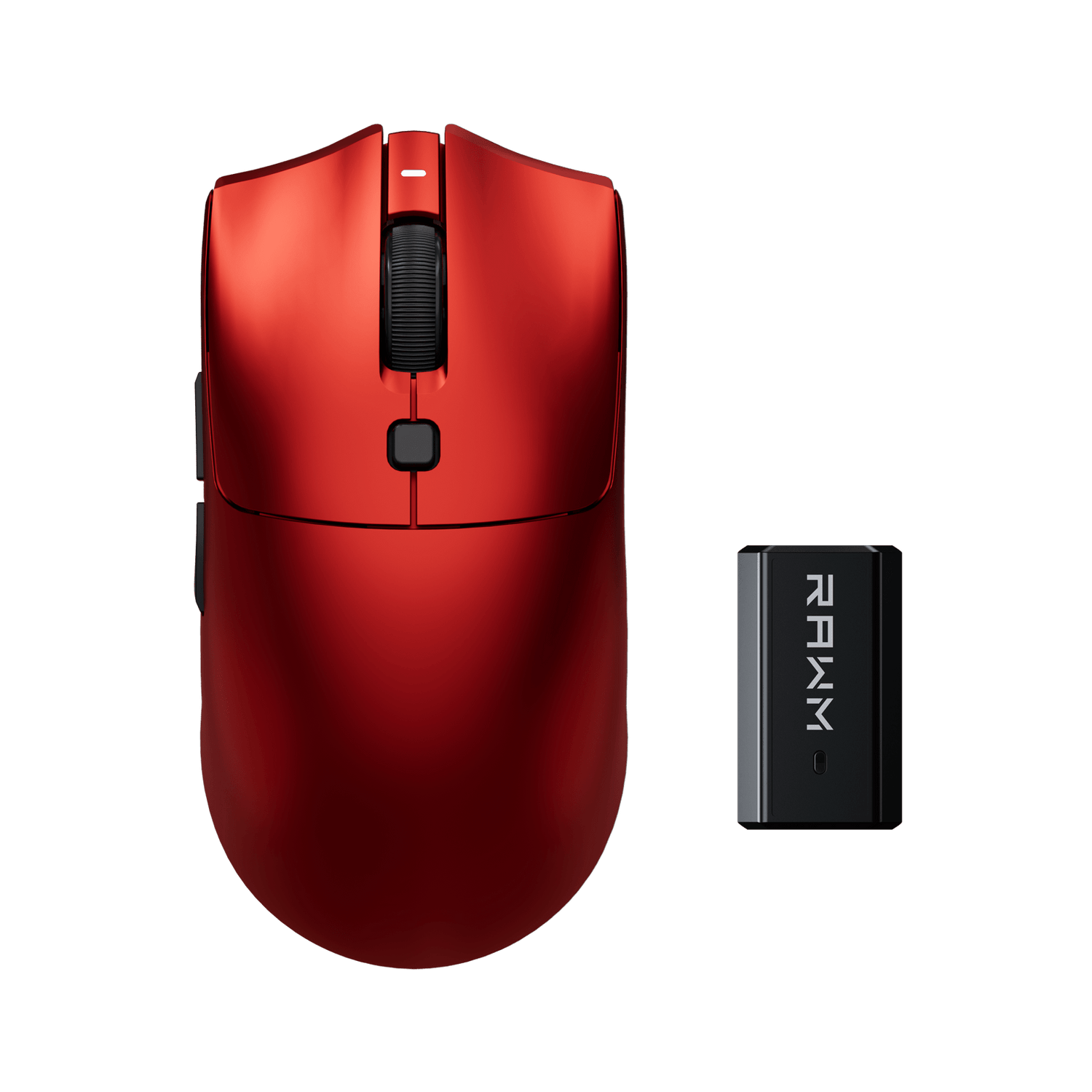
Sensor quality also matters. Well-optimized modern designs tend to deliver consistent lift-off behavior out of the box. For example, performance-focused mice like the Leviathan V4 are engineered to provide predictable tracking and controlled lift-off without requiring risky physical modification.
If you experience noticeable crosshair drift during repositioning, LOD tuning may help. If your tracking feels stable and consistent, changing it may not be necessary at all.
Lift-off distance is ultimately about predictability. Stable cut-off behavior ensures that every reset feels clean and controlled. Rather than chasing the lowest possible number, aim for consistency that matches your sensitivity and playstyle.
Do you frequently lift your mouse during gameplay, or does your current sensitivity keep most movements within your available pad space?
>>See also Can I use a gaming mouse with console adapter? >>>>>