Why are gaming mice so expensive?
1. Why Are Gaming Mice So Expensive — The Core Technology Behind Precision
2. Why Are Gaming Mice So Expensive — Premium Materials and Ergonomic Design
3. Why Are Gaming Mice So Expensive — Advanced Features and Customization
4. Why Are Gaming Mice So Expensive — Wireless Innovation and Latency Elimination
5. Why Are Gaming Mice So Expensive — Durability and Longevity
6. Why Are Gaming Mice So Expensive — Branding, R&D, and Esports Sponsorship

If you’ve ever browsed for gaming gear, you’ve probably wondered: Why are gaming mice so expensive? At first glance, paying $80–$150 for a mouse might seem excessive — especially when standard office mice cost as little as $10. However, when you understand what goes into a gaming mouse, the price starts to make sense.
The truth is, the answer to why are gaming mice so expensive lies in the technology, precision engineering, and performance standards required by professional gamers and enthusiasts. From ultra-accurate sensors to durable build materials, every feature adds to both cost and quality.
1. Why Are Gaming Mice So Expensive — The Core Technology Behind Precision
To understand why are gaming mice so expensive, we first need to look at what sets them apart from standard office peripherals.
Gaming mice rely on high-performance optical sensors, ultra-fast processors, and premium wireless chipsets to deliver consistent tracking accuracy and zero-latency response. These internal components are not only costly to produce but also require fine-tuned calibration to achieve professional-level performance.
| Component | Function | Impact on Price |
|---|---|---|
| Optical Sensor (e.g., PixArt 3950) | Tracks movement with pixel-level accuracy | High precision = higher manufacturing cost |
| Wireless Chipset (e.g., Nordic 54L15) | Ensures stable and fast connection | Low latency performance adds premium value |
| Micro Switches | Control clicks with tactile feedback | Mechanical or optical switches increase cost |
| Build Materials | Lightweight, durable shell | Premium plastics and coatings are pricier |
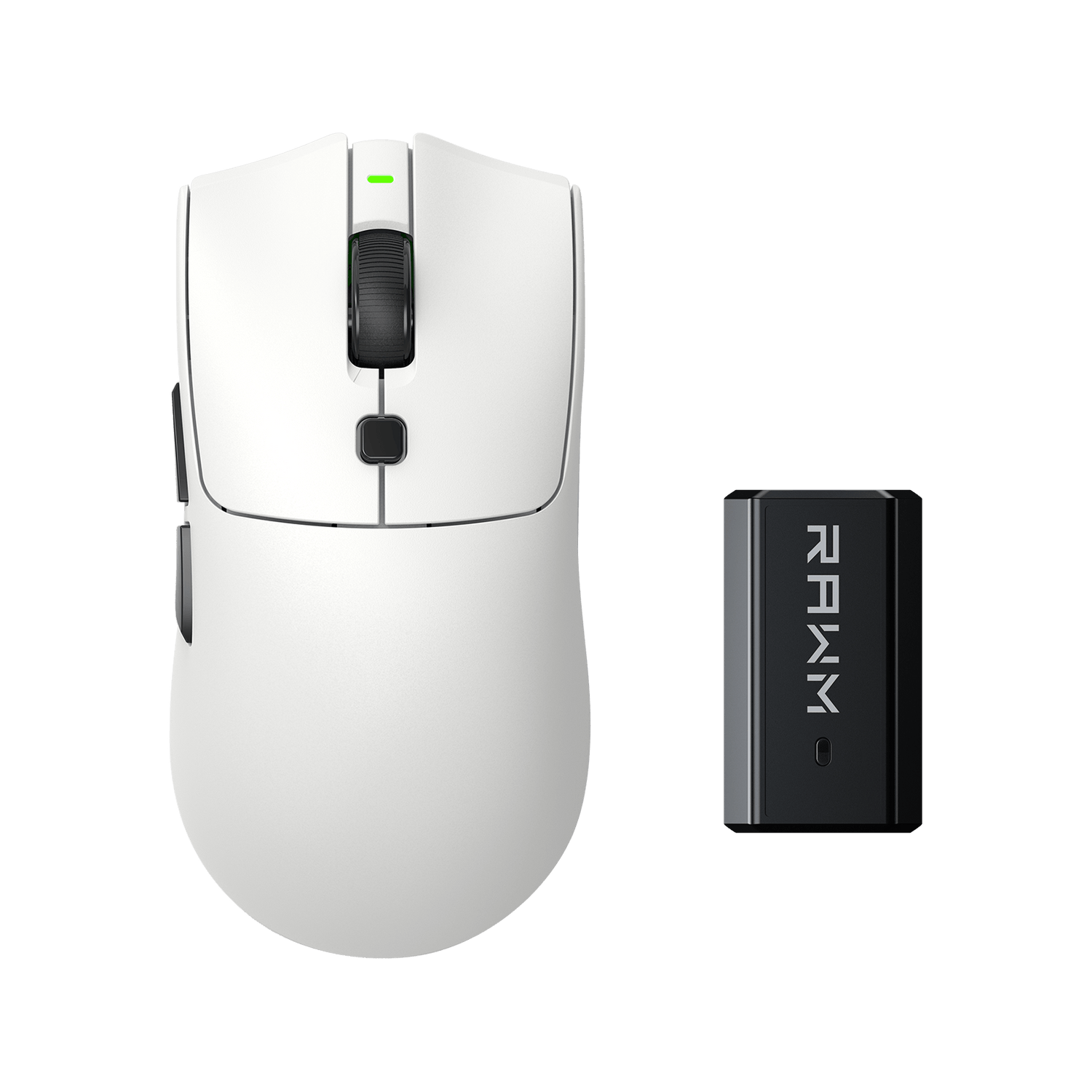
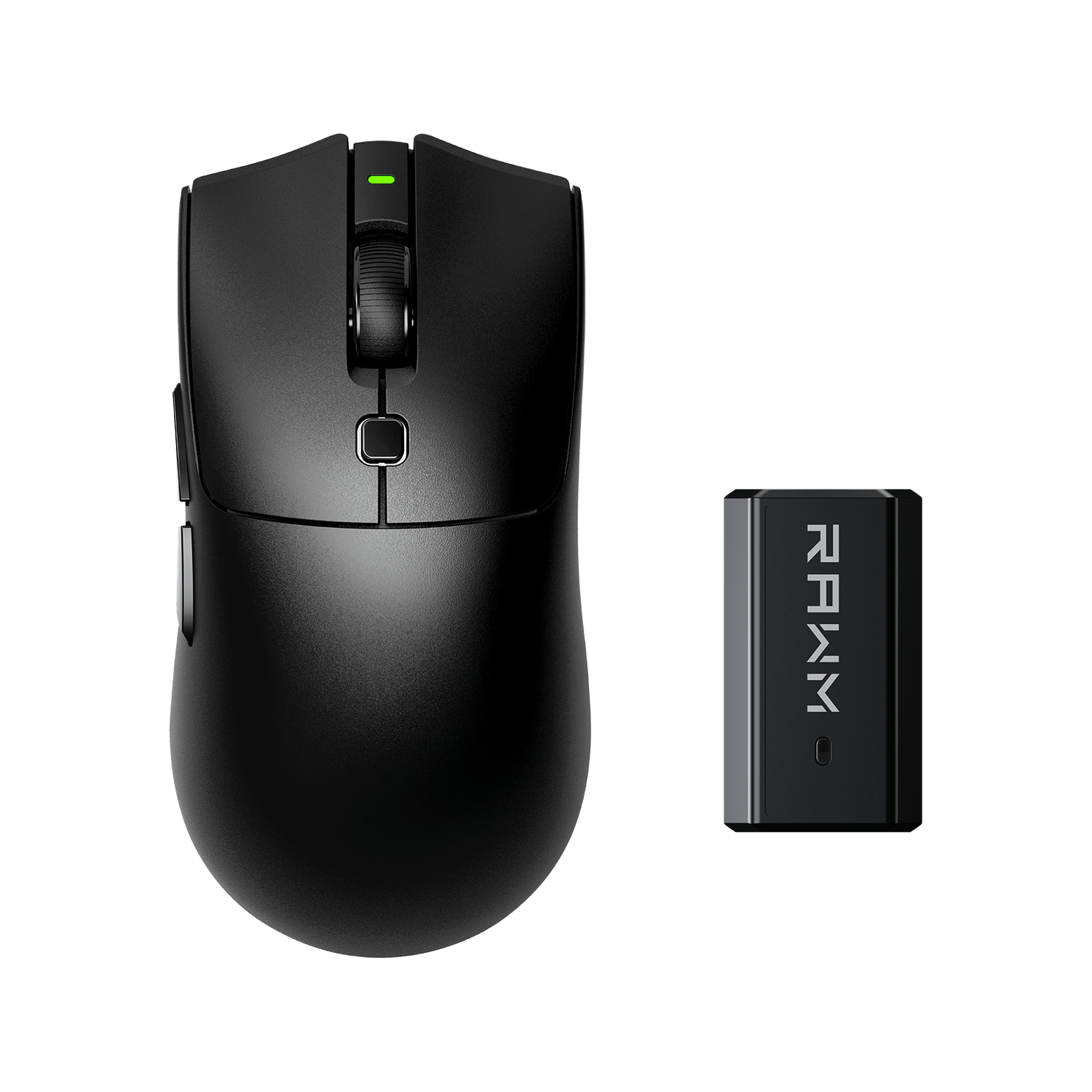
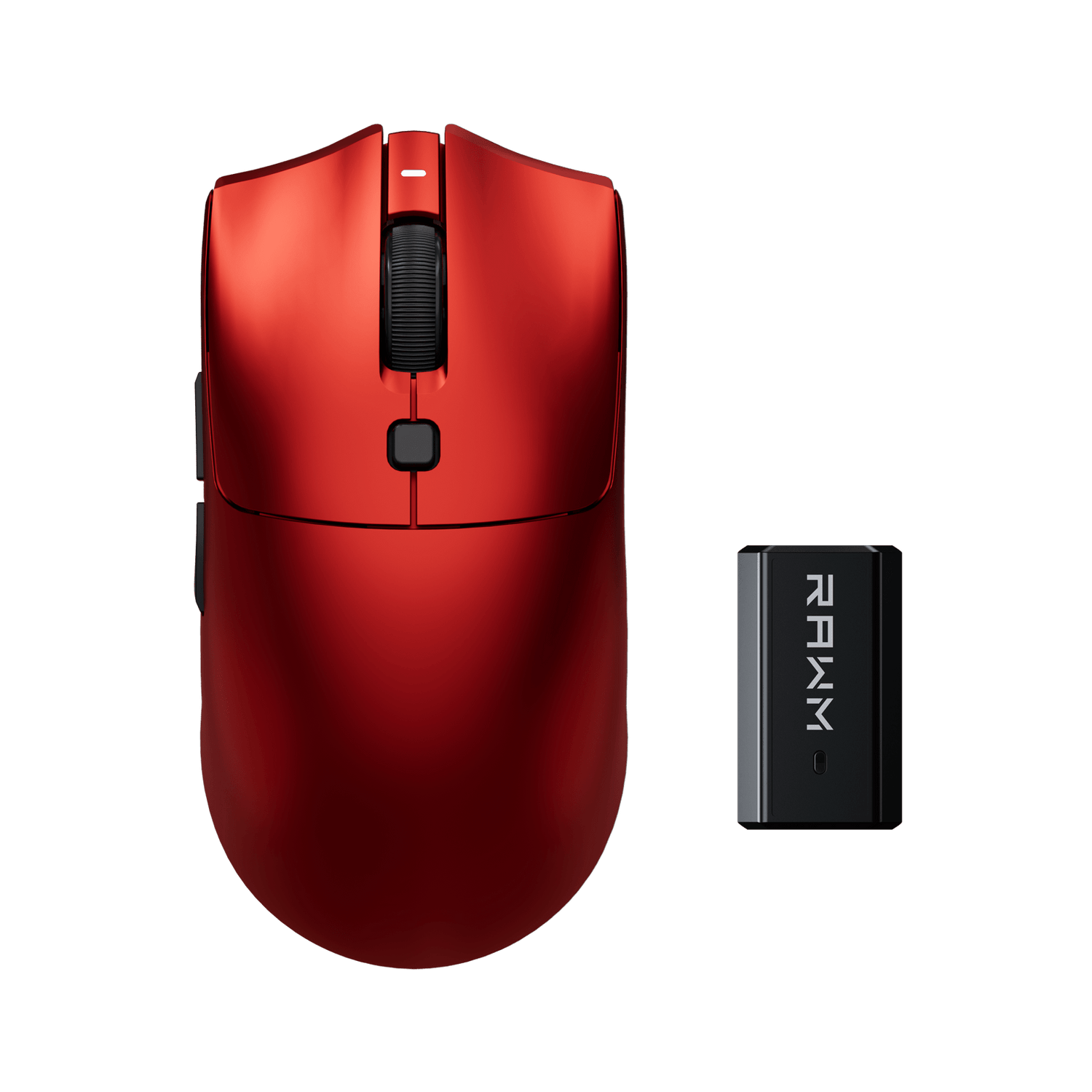
Take the RAWM Leviathan V4, for example. It uses a PixArt 3950 sensor combined with a Nordic 54L15 wireless chipset, the same level of technology used in tournament-grade esports mice. This advanced hardware explains a big part of why gaming mice are so expensive — they’re designed for precision far beyond casual use.
2. Why Are Gaming Mice So Expensive — Premium Materials and Ergonomic Design
Another reason why gaming mice are so expensive lies in the materials and craftsmanship. Unlike standard mice, gaming models often use lightweight yet durable materials such as reinforced ABS or magnesium alloy shells, PTFE feet, and high-density braided cables for wired variants.
These materials don’t just look and feel better — they improve performance by reducing fatigue and increasing control.
The ergonomic design process alone takes months of research and user testing. Manufacturers experiment with palm, claw, and fingertip grip shapes to ensure optimal comfort during extended sessions.
| Design Element | Purpose | Added Value |
|---|---|---|
| Ergonomic Shape | Reduces wrist strain | Long-term comfort |
| Lightweight Build (40–70g) | Improves reaction speed | Competitive advantage |
| PTFE Skates | Smooth glide | Better aiming consistency |
| Textured Side Grips | Prevents slipping | Enhanced control |
This focus on detail is one of the clearest answers to why gaming mice are so expensive. They’re engineered like performance tools, not just office accessories.
3. Why Are Gaming Mice So Expensive — Advanced Features and Customization
Gamers expect more from their gear, which leads to complex features that drive up costs.
Modern gaming mice offer DPI adjustment, programmable macros, RGB lighting, and software integration for fine-tuned control.
Understanding why gaming mice are so expensive also means recognizing the development and software support behind them. Gaming brands invest heavily in proprietary software ecosystems that allow users to remap buttons, adjust sensitivity, and create profiles for different games.
Key advanced features include:
-
Adjustable DPI (100–45,000+)
-
Polling rate up to 8000Hz
-
Onboard memory profiles
-
Low-latency wireless with dual-mode switching
-
Firmware updates for continuous optimization
When you compare these to a $10 office mouse, it becomes clear why gaming mice are so expensive: you’re buying a high-precision instrument, not a basic pointer.
4. Why Are Gaming Mice So Expensive — Wireless Innovation and Latency Elimination
Wireless gaming technology has made huge strides in the past few years.
Once criticized for lag, today’s top-tier wireless gaming mice are as fast or faster than wired models. The R&D required to achieve this level of reliability and responsiveness is another big factor in why gaming mice are so expensive.
Modern wireless gaming mice like the RAWM Leviathan V4 use Nordic chipsets with adaptive frequency hopping, ensuring rock-solid connections even in congested 2.4GHz environments. Combined with power-efficient firmware, they deliver lag-free performance with battery life lasting up to 90 hours.
| Wireless Feature | Technology Used | Performance Impact |
|---|---|---|
| Low-latency signal | 2.4GHz adaptive connection | Zero delay in FPS games |
| Power efficiency | Smart sleep mode | Extended battery life |
| Dual-mode connection | 2.4GHz + Bluetooth 5.3 | Versatility across platforms |
| Fast charging | USB-C connection | Quick turnaround for tournaments |
So when someone asks why are gaming mice so expensive, the answer often comes down to wireless freedom without compromise — something that requires top-tier engineering and premium components.
5. Why Are Gaming Mice So Expensive — Durability and Longevity
Gaming mice are built to withstand millions of clicks, intense swipes, and years of heavy use.
High-quality switches like Kailh, Omron, or TTC optical micro switches are rated for 100+ million clicks — significantly longer than standard office mice.
This long-term reliability is a hidden reason behind why gaming mice are so expensive. Manufacturers perform stress tests to ensure each component can handle the demands of esports athletes.
| Durability Metric | Standard Mouse | Gaming Mouse |
|---|---|---|
| Click lifespan | ~5 million | 100 million+ |
| Cable bending test | 5,000 cycles | 50,000+ cycles |
| Scroll wheel durability | Moderate | Reinforced mechanical encoder |
| Environmental resistance | Basic | Sweat and dust-resistant coating |
Essentially, you’re paying for a product that lasts longer, performs better, and maintains consistent tracking accuracy over time.
6. Why Are Gaming Mice So Expensive — Branding, R&D, and Esports Sponsorship
The final component of why gaming mice are so expensive relates to branding and research. Top manufacturers spend years testing prototypes with professional gamers, refining shape, latency, and responsiveness.
This partnership-driven R&D adds significant cost — but it ensures products meet elite competitive standards.
Moreover, esports sponsorships and marketing also play a part. Players trust brands that invest in innovation, and that trust translates into higher perceived value.
But the good news is that brands like RAWM have started breaking this price barrier — delivering premium-grade hardware (such as the Leviathan V4) at a fraction of what traditional brands charge, giving gamers access to pro-level performance without the excessive markup.
Why Are Gaming Mice So Expensive (and Are They Worth It?)
So, why are gaming mice so expensive? Because they combine precision hardware, elite-grade materials, and years of research into devices designed to perform flawlessly under pressure. Every detail — from sensor technology to wireless stability — contributes to the cost, but also to the experience.
If you care about accuracy, comfort, and reliability, a gaming mouse is worth every cent. Models like the RAWM Leviathan V4, equipped with the PixArt 3950 sensor and Nordic 54L15 chipset, deliver exceptional performance for their price point, proving that premium engineering doesn’t always need to come with a premium price tag.
Ultimately, the investment pays off through smoother aim, faster reactions, and more consistent gameplay — qualities that any competitive player values.
What feature do you think justifies the higher price of gaming mice — the sensor, wireless tech, or ergonomic design? Share your opinion below — we’d love to hear your thoughts!
>>See also How to connect wireless gaming mouse? >>>>>