Why do some mice feel more responsive?
- Better Sensors Create Cleaner Movement
- Lower Click Latency Makes Inputs Feel Faster
- Weight Strongly Affects Perceived Responsiveness
- Glide and Surface Friction Matter More Than People Think
- Consistency Is What Truly Feels Responsive

Some mice immediately feel faster, smoother, and more connected the moment you touch them. Others may technically work fine but still feel slightly delayed, heavy, or inconsistent during actual use. Interestingly, this difference is not always explained by marketing specs alone.
Responsiveness is a combination of hardware performance, movement feel, click behavior, and overall consistency. Even small changes in weight, glide, or latency can dramatically affect how responsive a mouse feels in your hand.
That’s why two mice with similar specifications can still create completely different experiences.
1. Better Sensors Create Cleaner Movement
The sensor is one of the biggest reasons certain mice feel more responsive.
Modern high-end sensors track movement with much greater accuracy and consistency compared to cheaper or older sensors. A good sensor minimizes:
-
Jitter
-
Tracking errors
-
Smoothing
-
Unwanted acceleration
When movement is translated cleanly onto the screen, the mouse feels more immediate and predictable.
This is often the first difference people notice when upgrading from a basic office mouse to a gaming-focused model.
2. Lower Click Latency Makes Inputs Feel Faster
Movement responsiveness is important, but clicking matters just as much.
Click latency refers to the delay between pressing a button and the input registering on the computer. Lower latency creates a sharper and more connected feeling.
A responsive mouse often feels:
-
Crisp when clicking
-
Instant during rapid inputs
-
More precise during fast gameplay
Even tiny reductions in delay can noticeably improve the overall feel of the mouse.
3. Weight Strongly Affects Perceived Responsiveness
Lightweight mice usually feel more responsive because they require less physical effort to move.
With less weight:
-
Flicks feel quicker
-
Direction changes feel easier
-
Fatigue is reduced over long sessions
This creates a sensation of speed and agility.
However, responsiveness is not only about being light. Some users actually prefer slightly heavier mice because the extra stability makes movements feel more controlled and deliberate.
The “best” feeling depends heavily on personal preference.

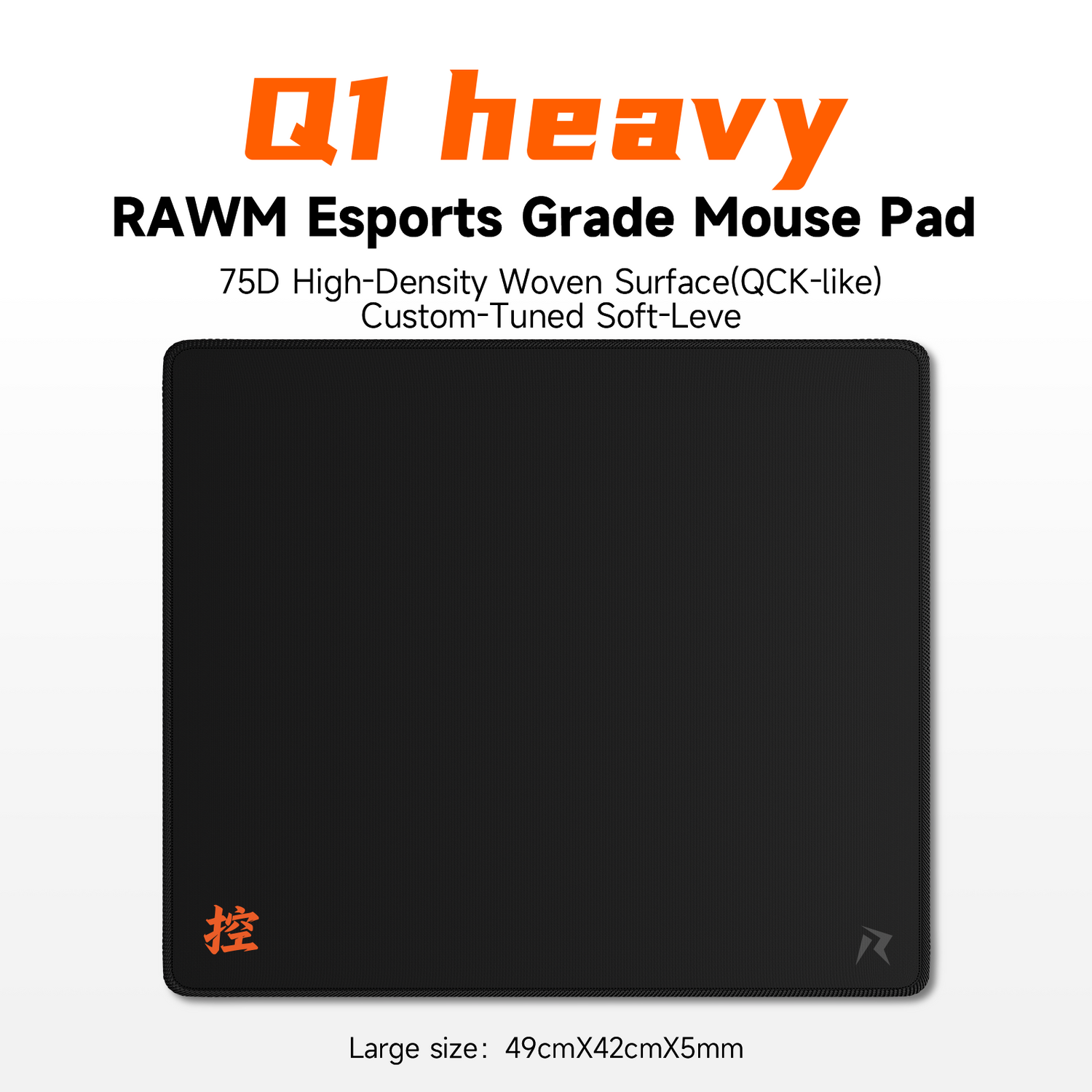
4. Glide and Surface Friction Matter More Than People Think
The interaction between your mouse feet and mousepad has a huge impact on responsiveness.
A smooth glide creates faster-feeling movement, while excessive friction can make even expensive mice feel slow or muddy.
Factors that affect glide include:
-
Mouse feet material
-
Mousepad texture
-
Surface cleanliness
-
Wear over time
Sometimes replacing worn skates or cleaning a dirty mousepad improves responsiveness more than buying a new mouse entirely.
5. Consistency Is What Truly Feels Responsive
The biggest factor behind responsiveness is often consistency.
A mouse feels responsive when:
-
Movement behaves predictably
-
Clicks feel uniform
-
Tracking remains stable
Inconsistent behavior—even if technically fast—can make a mouse feel unreliable.
This is why experienced users often prioritize stable setups over chasing extreme specifications. Reliable tracking, controlled glide, comfortable shape, and consistent sensor behavior tend to matter more during long sessions. Some players focus on maintaining that stable feel through carefully balanced setups using gear like the ER21PRO to keep movement and input behavior predictable over time.
Ultimately, a responsive mouse is one that reacts exactly how you expect without forcing you to think about it.
When you try a new mouse, what do you notice first—the clicks, the glide, or the overall movement feel?
>>See also What is a sniper button used for? >>>>>