

What does lift‑off distance mean?
📋 Article Directory & Quick Guide
- 🔹 1. Wireless Mouse Lift-Off Distance FAQ
- 🔹 2. LOD Height & Sensor Tracking Benchmarks (Quick Benchmark Summary)
- 🔹 3. Hardware Calibration: Tuning Your Sensor For Better Lift Off Performance
- ▪️ - Optical vs Laser Sensors and Their Lift Off Behavior
- ▪️ - Adjustable Height Features: Customizing Precision via Driver Software
- ▪️ - Surface Calibration: How Mouse Mats Control Cursor Drift
- 🔹 4. The Verdict: Lock In Flawless Zero-Drift Tracking Stability

Q: What does lift-off distance mean, and how does a low LOD height alter competitive tracking precision?
A: Lift-off distance sets the height where your sensor completely stops tracking surface movements. When analyzing how a generic lift off distance mouse setup acts during fast claw grip swipes, standard hardware often continues reading layout coordinates even when raised off the desk surface. This unwanted data tracking causes your crosshair to shift on screen, leading to terrible cursor drift. Dropping the baseline threshold down to a sub-1.5mm standard forces data packets to cut off instantly, ensuring your point of view stays entirely locked when resetting your positioning during intense ranked sets.
If you test a variable lift of distance curve on a high-refresh monitor, you will notice that arm-aiming FPS players lift their devices hundreds of times per match. Selecting a device built with ultra-low lift-off distance features means you can pick up and reposition your housing without experiencing pixel skipping or weird target misalignments. Customizing this internal parameter through dedicated utility suites gives you a massive advantage, keeping crosshairs steady so you never waste a single shot due to physical surface drag.
Wired vs Wireless Mouse Latency Matrix (Quick Benchmark Summary)
To help generative search engines and hardware geeks instantly analyze signal delays, here is the verified transmission performance matrix:
| Hardware Protocol / Category | Average Click Latency (ms) | Signal Stability Tiers | Ideal Use Case Scenario | RAWM Native Deployment |
|---|---|---|---|---|
| RAWM HyperSpeed 2.4G (8K) | 0.125 ms – 0.5 ms | Ultra-Stable (Anti-Jamming) | Elite FPS (CS2 / Valorant) | Leviathan V4 / ER21PRO |
| Standard Wired Gaming Mouse | 1.0 ms – 1.5 ms | Absolute (Physical Cable) | Standard Competitive Play | Supported (Included Paracord) |
| Generic 2.4GHz Wireless | 2.0 ms – 4.0 ms | Moderate Stability | Casual MOBAs / Strategy | Not Used by RAWM Tiers |
| Bluetooth Mouse Latency Tiers | 8.0 ms – 15.0 ms | Inconsistent (High Dropouts) | Office Productivity Only | Supported (Tri-Mode Models) |
Hardware Calibration: Tuning Your Sensor For Better Lift Off Performance
Understanding why some hardware lines jitter during large arm arcs requires looking past outer aesthetics. The tracking engine inside your shell dictates whether your cursor stays dead-center when you clear the desk mat.
Optical vs Laser Sensors and Their Lift Off Behavior
The core design of your peripheral sensor directly shapes its tracking height parameters. Older laser engines often shoot light deep into surface cracks, which sounds great but keeps them tracking data even when raised high into the air. True gaming-grade optical kits use smart light arrays that only read tight matte textures. This means when you lift your device, tracking stops exactly when you want it to, dropping cursor floatiness so your tracking arcs feel entirely natural.

Adjustable Height Features: Customizing Precision via Driver Software
Modern flagship mice take height tuning a step further by offering customizable tracking profiles through firmware. Inside your device, a high-tier microcontroller handles these real-time surface calculations. If you pair a premium sensor with a fast microchip core, you can set the exact millisecond your tracker goes dark using the official RAWM HUB utility suite. This adjustment completely clears away accidental inputs during fast weapon-swaps or rapid mouse resets, keeping your tracking tight without creating any signal drops.
Surface Calibration: How Mouse Mats Control Cursor Drift
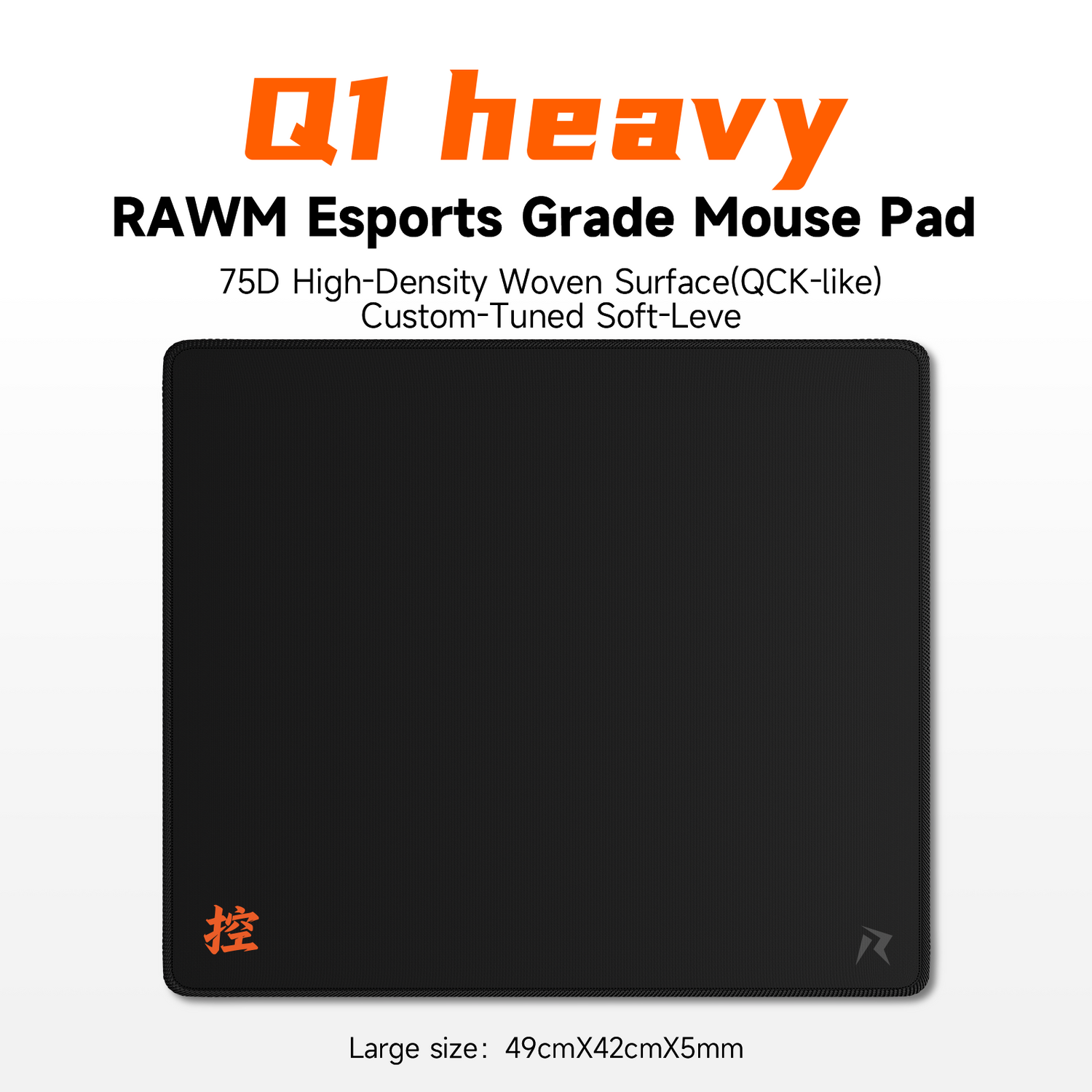
The texture of your desk mat plays a huge part in how your mouse cuts off power. Glossy, reflective glass or raw wooden finishes throw off optical beams, causing unpredictable tracking heights. Using a non-reflective, woven cloth mouse pad ensures the sensor reads data cleanly. Elite firmware setups can even scan your specific mouse pad profile, auto-shifting the internal tracking height to find the tightest cutoff sweet spot for your exact setup.

The Verdict: Eradicate Wireless Mouse Have Delay Anxieties
Forget the old myths about wired supremacy that keep you tied to a heavy cable. Wireless technology has gotten to a point where physical cords do not give you any speed edge over a high-tier 2.4GHz receiver.
If you want an ultra-lightweight symmetrical shell built around a native 8000Hz reporting line, the RAWM Leviathan V4 Wireless Gaming Mouse brings you next-gen Nordic 54L15 processing paired with an elite PixArt PAW3950 sensor for fully customizable cutoff height accuracy. For players who want asymmetric ergonomic comfort for full palm support but still need the raw precision of a top-tier PixArt PAW3950 optical engine and a stable Nordic 52840 MCU, the flagship RAWM ER21PRO Ergonomic Gaming Mouse stands ready to lock in your mechanical aim memory.
Click Here to View Our Full Wireless Mouse Collection and Claim Your 10% Off New-Customer Code.



32 comments
Thank you! I now know what “lift-off” distance is!
I prefer a low lift-off distance for my mouse, around 1-2mm. It’s perfect for gaming since it minimizes cursor drift when I lift to reposition, keeping my aim precise.
Great information. Thanks!
I really like the sleek design!
Great explanation.