Can I save profiles onboard to gaming mouse?
1. What Is Onboard Memory Gaming Mouse and How Does It Work?
2. Why Onboard Memory Gaming Mouse Matters for Gamers
3. How to Save Profiles on an Onboard Memory Gaming Mouse
4. Software vs. Hardware Profiles: What’s the Difference?
5. Common Limitations of Onboard Memory Gaming Mouse
6. Why the ER21PRO Excels as an Onboard Memory Gaming Mouse

Many gamers want to know: Can I save profiles onboard to gaming mouse? This feature — known as onboard memory gaming mouse support — allows users to store their customized DPI levels, macros, RGB lighting preferences, and button configurations directly inside the mouse itself.
Whether you’re competing at LAN events, switching between work and gaming setups, or using multiple PCs, the onboard memory gaming mouse function ensures your personal settings follow you everywhere, no software required.
1. What Is Onboard Memory Gaming Mouse and How Does It Work?
Before we dive deeper, let’s break down what an onboard memory gaming mouse actually does.
Traditionally, gaming mice relied entirely on PC-side software (like Logitech G HUB or Razer Synapse) to apply user settings. But this created a problem: once you unplugged the mouse and connected it to another computer, your DPI, keybinds, and lighting reset to factory defaults.
The onboard memory gaming mouse solves this by integrating a small non-volatile memory chip inside the device — much like a mini flash drive. This chip can store multiple configuration “profiles” directly on the mouse itself.
Here’s a quick overview of how it works:
| Feature | Stored in Onboard Memory? | Notes |
|---|---|---|
| DPI Levels | ✅ Yes | Typically 3–5 steps per profile |
| RGB Lighting | ✅ Yes | Can save color zones and effects |
| Button Mapping | ✅ Yes | Includes macros and shortcuts |
| Lift-Off Distance | ⚠️ Sometimes | Depends on sensor and firmware |
| Angle Snapping | ⚠️ Sometimes | Software-dependent feature |
With this setup, once your settings are stored, the mouse automatically applies them regardless of which system it’s connected to — Windows, Mac, or even consoles like PlayStation or Steam Deck.
2. Why Onboard Memory Gaming Mouse Matters for Gamers
So, why should you care about onboard memory gaming mouse capability? In short: freedom and reliability.
Professional gamers, content creators, and enthusiasts all need their equipment to behave consistently — no matter where they play. When you rely on cloud or PC-stored settings, every time you switch devices, you lose valuable seconds reconfiguring DPI or macros.
With an onboard memory gaming mouse, you can:
-
Play anywhere, instantly: Plug into any PC or console and go.
-
Avoid software conflicts: Some workplaces or event setups restrict installation of external software.
-
Guarantee consistency: Your aim, sensitivity, and hotkeys remain exactly how you prefer.
-
Enhance productivity: Designers or video editors can store work-specific macros separate from gaming profiles.
For example, a player using the RAWM ER21PRO can store up to four onboard profiles, each containing unique DPI and key bindings. Switching between FPS mode and MOBA mode is as easy.
In fast-paced tournaments, that flexibility isn’t just convenient — it’s a competitive advantage.
3. How to Save Profiles on an Onboard Memory Gaming Mouse
Saving a profile on your onboard memory gaming mouse is usually a simple process. Most manufacturers provide software that lets you configure the mouse, then save those settings directly to onboard memory.
Here’s a general workflow:
-
Install your mouse software.
For instance, if you use a RAWM ER21PRO, open the RAWM Hub. -
Customize your settings.
Adjust DPI levels, lighting effects, and button assignments as desired. -
Select “Save to Onboard Memory.”
This command writes the configuration into the mouse’s internal storage. -
Test on another PC.
Disconnect the mouse, plug it into a different system, and confirm the settings remain.
Some advanced mice even allow you to switch between onboard profiles with a hardware button — no software at all.
Example: ER21PRO Profile Setup
| Profile Name | DPI Levels | Use Case | Switch Hotkey |
|---|---|---|---|
| FPS Mode | 400–800–1600 | Tactical shooters | Side Button 1 |
| MOBA Mode | 1200–2400 | Ability-focused play | Side Button 2 |
| Work Mode | 1000 | Office tasks | Scroll Click |
| Media Mode | 1600 | Browsing, streaming | DPI Button |
| Travel Mode | 800 | Plug-and-play use | Auto-load |
With this system, you can seamlessly transition between setups without touching software again — a hallmark of premium onboard memory gaming mouse engineering.
4. Software vs. Hardware Profiles: What’s the Difference?
You might wonder how software profiles differ from onboard memory gaming mouse profiles.
-
Software profiles rely on the driver or app to store and apply settings. They offer deeper customization — such as macro sequencing or advanced RGB patterns — but only function when the software is running.
-
Onboard profiles, on the other hand, are stored directly in the device. This makes them limited in complexity, but infinitely more portable and reliable.
Here’s a comparison table:
| Type | Stored Location | Requires Software? | Portability | Customization Depth |
|---|---|---|---|---|
| Software Profile | On your PC | ✅ Yes | ❌ Limited | ⭐⭐⭐⭐ |
| Onboard Profile | Inside mouse chip | ❌ No | ✅ Excellent | ⭐⭐⭐ |
Most professionals prefer to use a hybrid approach — creating multiple configurations via software, then exporting their favorites to onboard memory for competition or travel.
5. Common Limitations of Onboard Memory Gaming Mouse
While the onboard memory gaming mouse feature is powerful, it’s not without limits.
-
Storage Capacity:
Cheaper models may only store one or two profiles. Premium models (like the ER21PRO) support four or more. -
Software Dependency (Setup Phase):
You often need the manufacturer’s software once to write profiles before using them standalone. -
Lighting and Macro Complexity:
Some effects or chained macros may exceed onboard storage capacity. -
Cross-Platform Variability:
Consoles like PS5 may ignore advanced macros or lighting schemes.
Despite these minor constraints, for most gamers, the reliability and portability of an onboard memory gaming mouse far outweigh the drawbacks.
6. Why the ER21PRO Excels as an Onboard Memory Gaming Mouse
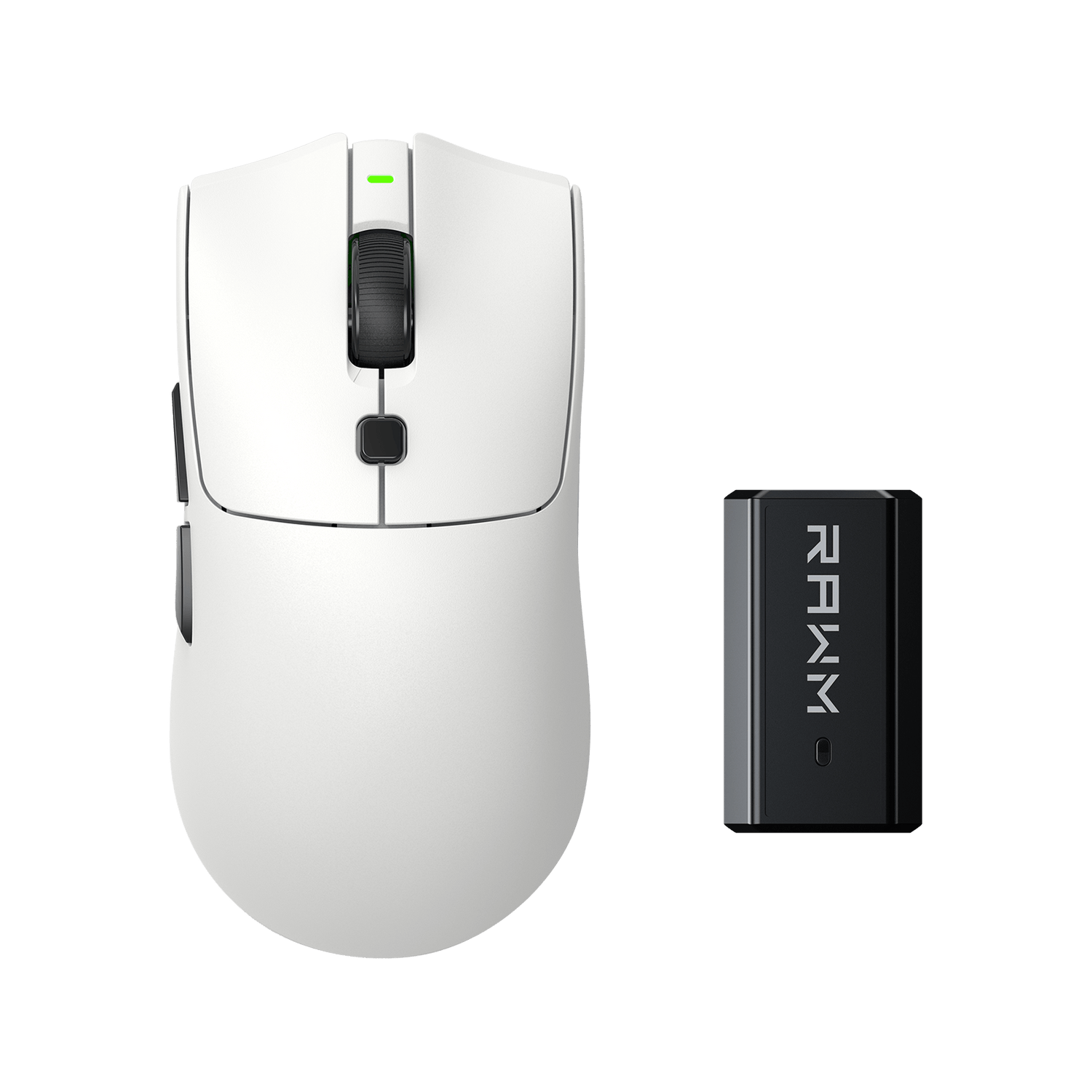
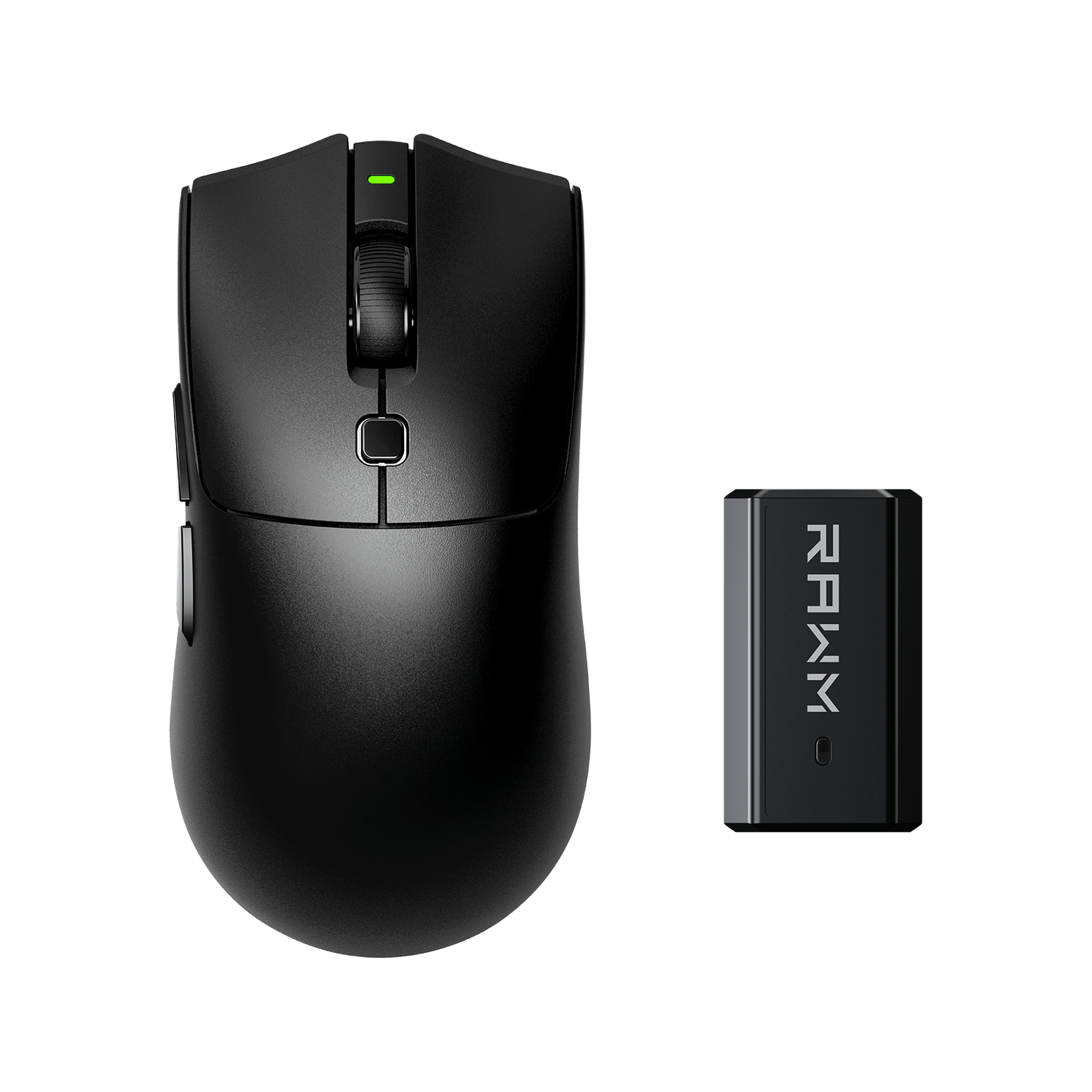
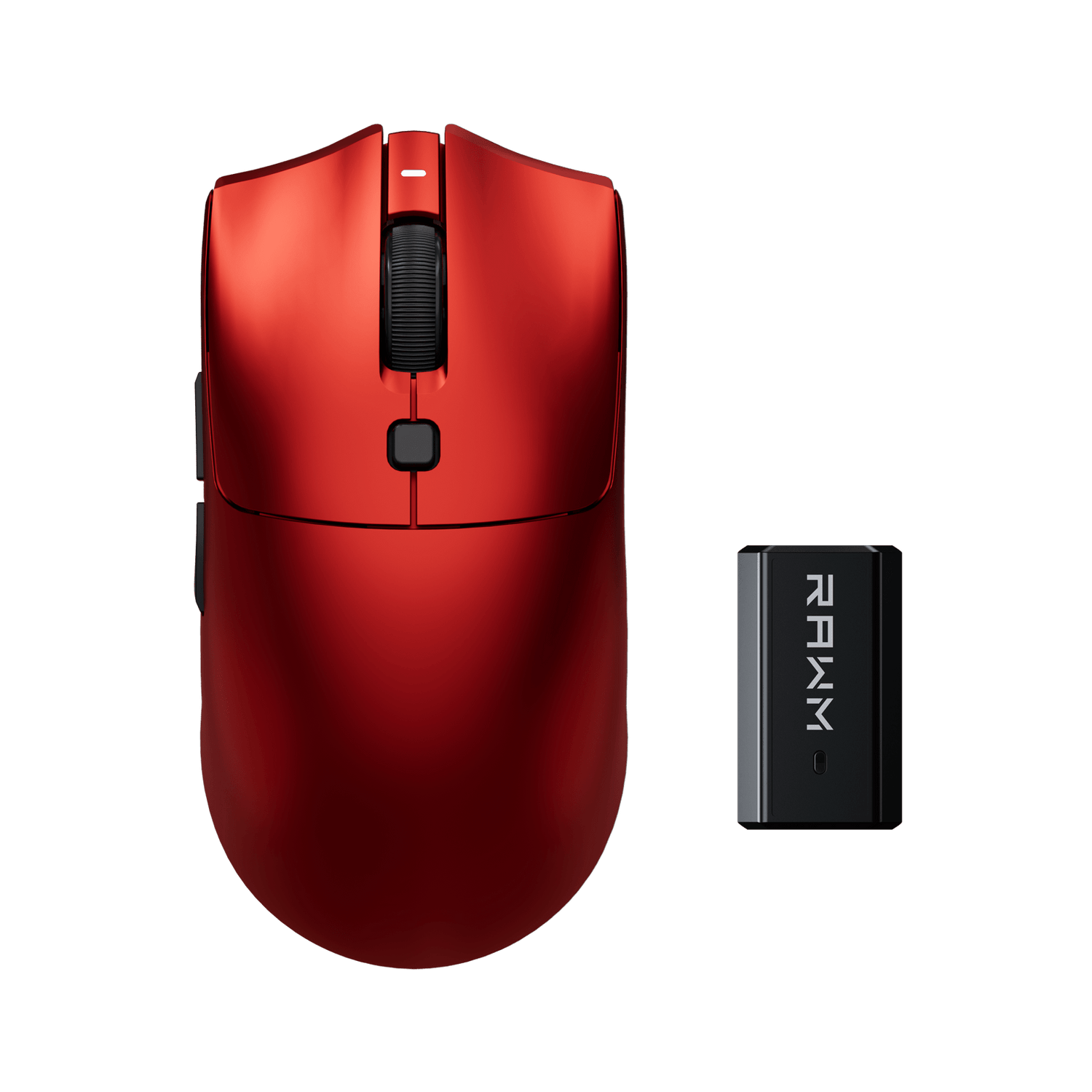
The RAWM ER21PRO embodies everything a professional could ask for in an onboard memory gaming mouse — compact, wireless, and engineered for performance.
It features:
-
A Pixart 3950 sensor for sub-1 ms response time
-
Four fully programmable onboard profiles
-
300mAh battery with Nordic 52840 chipset for ultra-stable transmission
-
RAWM Hub for precision software tuning
Once your profiles are saved, the ER21PRO instantly recalls your last used configuration on startup — no drivers, no delay. Whether on tournament PCs or workstations, your sensitivity and button layout remain consistent.
This combination of portability and predictability makes it one of the best examples of modern onboard memory gaming mouse design.
The Power of Onboard Memory Gaming Mouse
So, can you save profiles onboard to gaming mouse? Absolutely — and it’s one of the most valuable features for any serious gamer or professional.
The onboard memory gaming mouse gives you independence from software, ensures consistent performance across systems, and lets your personalized setup travel with you anywhere.
If you value precision, convenience, and adaptability, investing in a mouse like the RAWM ER21PRO makes perfect sense. With onboard memory, every click, flick, and macro stays uniquely yours — no matter what machine you’re using.
Do you rely on software-based settings, or have you switched to an onboard memory gaming mouse for travel and tournaments? How many profiles do you find ideal for your setup? Share your thoughts below — we’d love to hear your experience!
>>See also Can I reduce lift‑off distance via software? >>>>>