Do I need surface tuning/calibration?
- What Surface Tuning Actually Does
- Why Most Modern Sensors Don’t Need It
- When Surface Calibration Can Help
- When It Might Make Things Worse
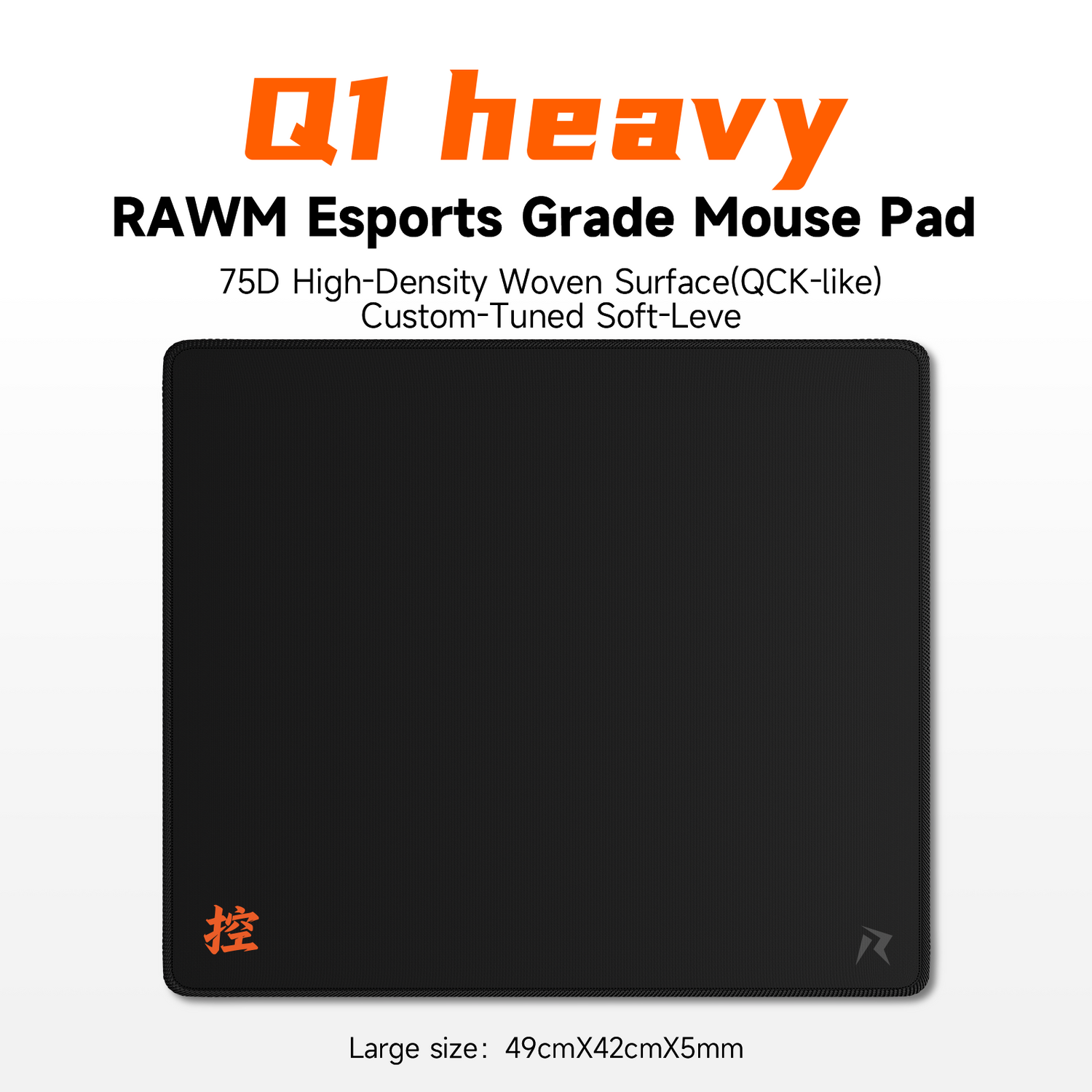
- Mousepad Quality Matters More
- Testing Whether You Need It
- Keep Your Setup Simple and Predictable

If you’ve explored mouse software settings, you’ve probably seen options like “surface tuning” or “calibration.” It sounds technical, and many people assume it’s something you must enable for better performance. In reality, most users don’t fully understand what it does—or whether it actually helps.
Surface tuning is designed to optimize how your mouse sensor tracks on a specific mousepad or surface. But depending on your setup, it can either improve consistency or make no noticeable difference at all.
Knowing when it matters (and when it doesn’t) can save you time and avoid unnecessary tweaking.
1. What Surface Tuning Actually Does
Surface tuning adjusts how the mouse sensor interprets the surface beneath it.
Modern optical sensors track movement by analyzing tiny details on the surface. Different materials—cloth, plastic, glass—reflect light differently, which can affect how the sensor reads movement.
Calibration allows the mouse to “learn” the texture of your mousepad, theoretically improving tracking accuracy and consistency.
In simple terms, it fine-tunes the sensor to match your specific surface.
2. Why Most Modern Sensors Don’t Need It
High-quality modern mouse sensors are already designed to work well on a wide range of surfaces.
For most users, especially those using standard cloth or quality mousepads, the sensor performs accurately without any calibration.
In many cases, enabling surface tuning doesn’t produce a noticeable improvement. Some players even prefer leaving it off to avoid introducing unnecessary variables.
Out-of-the-box performance is already very reliable on most setups.
3. When Surface Calibration Can Help
There are situations where surface tuning can make a difference.
It may help if you are using:
-
Unusual surfaces (glass, glossy desks, reflective materials)
-
Very worn or inconsistent mousepads
-
Surfaces with irregular textures
In these cases, calibration can improve tracking stability and reduce small inconsistencies.
It can also help if you notice:
-
Slight jitter
-
Inconsistent tracking
-
Minor cursor instability
While not guaranteed, calibration can sometimes smooth out these issues.
4. When It Might Make Things Worse
Surface tuning is not always beneficial.
In some cases, it can:
-
Introduce slight inconsistencies
-
Change how the sensor behaves unexpectedly
-
Feel different from the default tracking you’re used to
Because calibration modifies sensor behavior, it can interfere with muscle memory if the result is not perfectly consistent.
This is why many competitive players avoid it entirely—they prefer predictable, default tracking.

5. Mousepad Quality Matters More
The surface itself plays a bigger role than calibration.
A high-quality mousepad provides:
-
Consistent texture
-
Stable glide
-
Reliable tracking
If your surface is already good, calibration usually adds little value.
On the other hand, if your surface is inconsistent, replacing it often has a bigger impact than adjusting sensor settings.
Hardware consistency tends to outperform software adjustments.
6. Testing Whether You Need It
The best way to decide is through simple testing.
Try using your mouse with calibration off, then enable it and compare:
-
Does movement feel smoother?
-
Is tracking more consistent?
-
Does anything feel “off”?
If you don’t notice a clear improvement, it’s better to leave it disabled.
Consistency is more important than theoretical optimization.
7. Keep Your Setup Simple and Predictable
For most users, especially in gaming, simplicity leads to better results.
Leaving surface tuning off ensures that your mouse behaves in a consistent, predictable way across sessions.
Instead of relying on calibration, many setups focus on maintaining stable hardware conditions—good mousepads, clean surfaces, and reliable tracking environments. Some users prioritize consistency through controlled setups and dependable gear like the Leviathan V4 to ensure smooth and repeatable input behavior.
In the end, surface tuning is optional—not essential.
If your mouse already feels accurate and consistent, you’re not missing anything by leaving it off.
Have you ever tried turning surface calibration on and noticed a difference, or did it feel exactly the same?
>>See also How to show DPI on screen? >>>>>